Atlas Mountains & Agafay Desert with Camel Ride Tour Guide + Review (Marrakech, Morocco)
If you’re visiting Marrakech, there’s a good chance you’ll want to venture beyond the city’s busy medina, colorful souks, and seemingly endless activity. And honestly? You should!
Morocco has some incredible landscapes outside Marrakech, and one of the easiest ways to experience a completely different side of the country is with a day trip to the Atlas Mountains, Ourika Valley, and Agafay Desert.
This full-day excursion combines mountain scenery including waterfalls, traditional Berber villages, local food, and on some tours, a visit to the rocky landscapes of the Agafay Desert where you can also enjoy a camel or horse ride.
Trying to figure out if it is worth giving up an entire day of your Marrakech itinerary? And what is actually included? And what should you know before booking?
I gotchu – here’s everything to know about the Marrakech Atlas Mountains, Ourika Valley, and Agafay Desert day trip, including what to expect, what to bring, the best time to visit, and whether I’d recommend adding it to your Morocco itinerary.
Please note: this post contains affiliate links which means if you buy something following a link on this page, I may get a small commission. As an Amazon Associate, I earn from qualifying purchases. This is absolutely free for you/does not cost you anything extra! There’s no sponsored content nor do I run ads here so this helps so much in reducing the ever-increasing costs of keeping this site active.Thanks! Rosemary
Atlas Mountains & Agafay Tour: At a Glance
- Location: Outside Marrakech, Morocco – Atlas Mountains and Agafay Desert
- Experience: Guided group tour with options to add lunch as well as a horse or camel ride / Private tours are also available
- Tour Duration: Approximately 7 – 9 hours
- Tour Languages: Arabic, English, French, Spanish
- Pickup ?: Yes – round-trip transportation included from Marrakech
- Locations Visited: 7 hour tours: Atlas Mountains, Ourika Valley, Waterfalls / 9 hours + Agafay
- Activity Level Difficulty: Light to moderate walking with uneven and uphill/downhill terrain
Is the Atlas Mountains & Agafay Desert Day Trip Worth It?
If you have a full day available in Marrakech and want to see more of Morocco than just the city, this is a great excursion to book.
One of the biggest advantages is the variety. Rather than spending the entire day in one destination, you’ll travel through mountain valleys, visit a waterfall, see traditional villages, experience local culture, and can add on the experience of riding across the unusual rocky landscapes of the Agafay Desert.
That said, there are a few things to understand before booking.
- First, this isn’t a serious trekking excursion on the Atlas Mountains. While there is some walking on uneven terrain, including uphill and downhill sections, the emphasis is on sightseeing, cultural experiences, and enjoying the scenery.
- Second, Agafay isn’t the Sahara. If you’re picturing enormous golden sand dunes, you will not get it with this experience. Agafay is a rocky, almost lunar-looking desert landscape, and it offers a very different kind of beauty.
- And finally, this is a full day tour. You’ll be moving between several stops, so don’t expect to spend hours at each location.
My verdict: If you’re looking for an easy way to experience the Atlas Mountains, Ourika Valley, traditional Moroccan village life, and a desert landscape in one tour, this is a great addition to your Marrakech itinerary.
Weather + Best Time to Take a Atlas Mountains & Agafay Desert Tour with Camel Ride
Marrakech and Agafay can get extremely hot in summer, while the Atlas Mountains are cooler because of their higher elevation. In winter, you may even see snow on the higher mountain peaks.
- Spring (March–May): One of the best times to visit
- The Atlas Mountains are particularly beautiful as the landscape becomes greener, temperatures are comfortable for walking, and the Agafay Desert hasn’t yet reached its intense summer heat.
- March and April can bring occasional rain in the mountains, but generally offer pleasant sightseeing conditions.
- Summer (June–August): Off/Slow Season But It’s Because It Will Be HOT
- Summer is when you’ll need to be most mindful of the heat. Agafay can reach average daytime highs of approximately 98–100°F (37–38°C) in July and August.
- The Atlas Mountains offer some relief thanks to their elevation, but you’ll still want sun protection and plenty of water.
- Fall (September–November): Another excellent time
- September can still be quite warm, particularly in Agafay, but temperatures become increasingly comfortable in October and November.
- This is a great period for enjoying the mountain scenery and spending time outdoors without the intense summer heat.
- Note that October can be very busy with school holidays throughout Europe
- Winter (December–February): Cooler mountain conditions
- Winter is worth considering if you’re visiting Marrakech during the colder months, but don’t underestimate the temperature difference between the city and mountains.
- Imlil can have average nighttime temperatures around freezing in January, and higher elevations may receive snow.
- The Agafay Desert is generally much milder during the day, but temperatures drop considerably after sunset.
If you have flexibility, aim for spring or fall. You’ll generally get the most comfortable conditions for walking, sightseeing, and enjoying the scenery.
Atlas Mountains & Agafay Desert Tour with Camel Ride
Activity Details
- Overview: Gain a deeper understanding of Berber culture as you embark on an unforgettable guided scenic day trip to the Atlas Mountains.
- Details: 9 hours approximately
- Important Notes:
- Options for group tour in English and French (French speakers also have the option for a private tour)
- Option to include a camel or horse ride
- Special dietary restrictions will be accommodated as best as possible – always best to convey to operator after booking (and I would reiterate to guide when they message you the evening before)
- Not recommended for:
- Travelers with back problems, knee problems, heart problems or other serious medical conditions / pregnant travelers
Includes:
GOOD TO KNOW: As this may be important to some (and this wasn’t always the case on other Marrakech tours), there are clean, well-equipped and functional toilets at each stop that the guide will always proactively point out
My Booking for the Atlas Mountains & Agafay Desert Tour with Camel Ride
Full disclosure: this tour was part of a longer Marrakech: 3-Day Hot Air Balloon, Atlas, and Desert Tour was complimentary through GetYourGuide’s Partner program. While the tour was comped, I did not receive payment and the only requirement was to publish an honest review of the tour on GetYourGuide’s app. Again, there was NO social media or blog post requirement so this post isn’t sponsored by the tour company or GetYourGuide =)
Pick-Up Time Confirmation (and some general advice about booking Marrakech tours/activities)
Your exact pick up time (and as applicable location -If your hotel or riad is unreachable by van, a meeting point nearby will be arranged) will be communicated the evening before your tour. This is the common practice in Marrakech and often times will be late night ~ 2100 or 9 PM or later.
I did five tours whilst in Marrakech and I found that communication was lacking in someway or another for each tour – though it was definitely the best with this tour. Abderrahim was my tour guide and he called/messaged me the evening before with pick-up information including sending information about the pickup van (including a photo that was extremely helpful as it showed the license plate number).
Some things to note re Marrakech tours/pick-ups
- WhatsApp is vital ~ every single person that I communicated with in Morocco from the tour companies to guides to drivers all used WhatsApp
- If you don’t already have this app, download and set up a contact number prior to your Marrakech trip
- You will also need service/be on Wi-Fi at pick-up in case the driver/guide needs to get a hold of you
- Pick-up can happen anywhere from 10 minutes prior to scheduled time to 30 minutes after (traffic can be heavy and unpredictable).
- Morning pick-ups were often on time or even early but afternoon pickups tended to run late in my experience.
- Depending on where the driver is coming from, sometimes they will be across the street and often with traffic, the expectation is that you cross the street and come to the van (vs how in other parts of the world, we would wait for the van to come around and pick us up)
- Note that things can easily “lost in translation” so don’t be afraid to ask for clarification.
- For example, the information I was sent for this tour pickup was a specific store within the mall near my Airbnb. I took this literally but luckily was early to realize that the mall was closed and contacted the guide. He meant just in front of the mall – not inside (where the store was)…no harm intended but a difference in what I understood (took it to be literally that store) and what he understood the information to mean.
Pickup
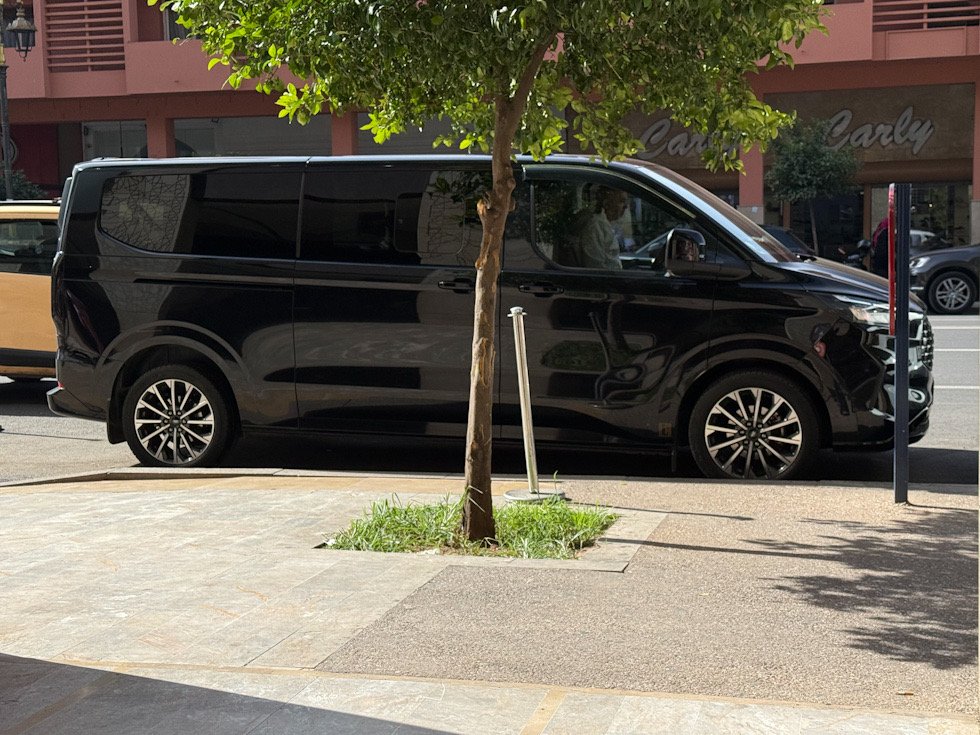
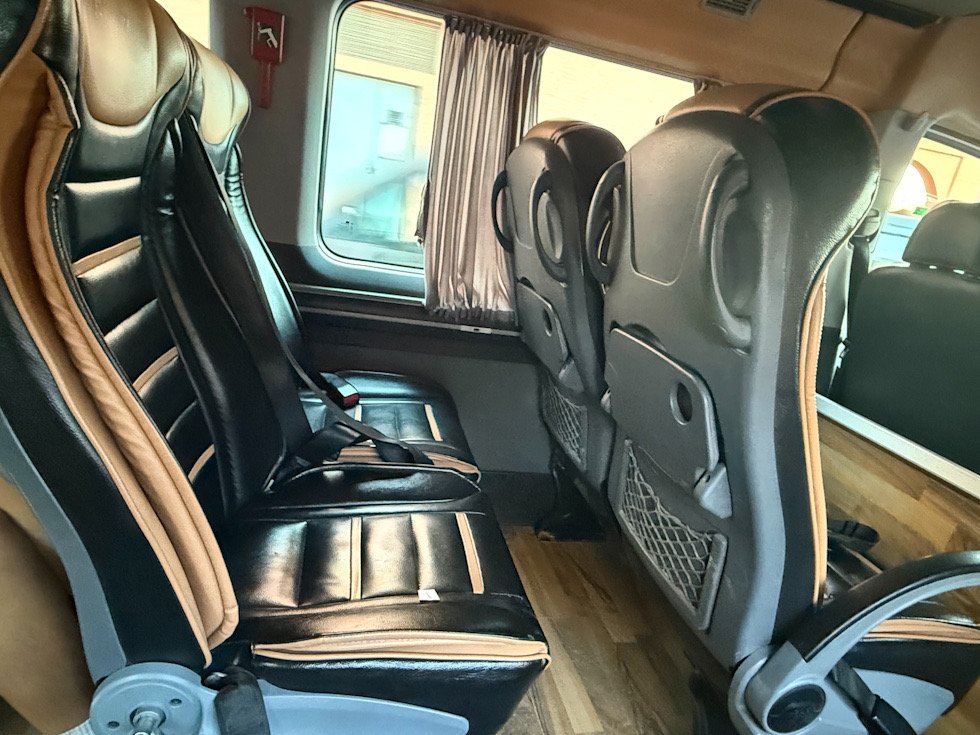
Every touristic van that I rode in whilst on my Marrakech tours were similar to the ones above with size and seating. Aziz was our driver for the day and was punctual.
Drive from Marrakech – Picture stop of Lalla Takerkoust
It was about a 35-40 minute ride from last pick-up to the first stop near the foothills of the High Atlas Mountains, near the edge of the Agafay Desert
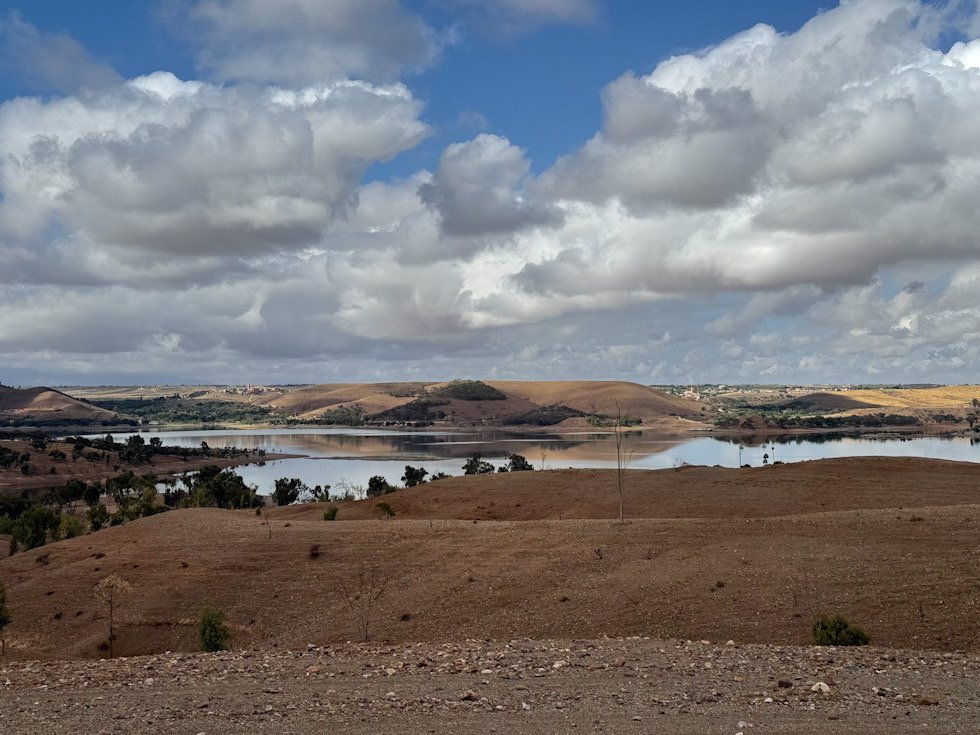
Lalla Takerkoust is a man made reservoir that was originally created for irrigation (and there’s also a dam that supplied electricity) that is now a spot for water sports – offering jet-skiing, kayaking, paddle boating, and wakeboarding.
First Stop was the Agafay Desert with Camel Ride part of the tour
Note that we did things in reverse order than is advertised on the tour which often is done to alleviate overcrowding but also could have been reversed due to how many children we had on this specific tour.

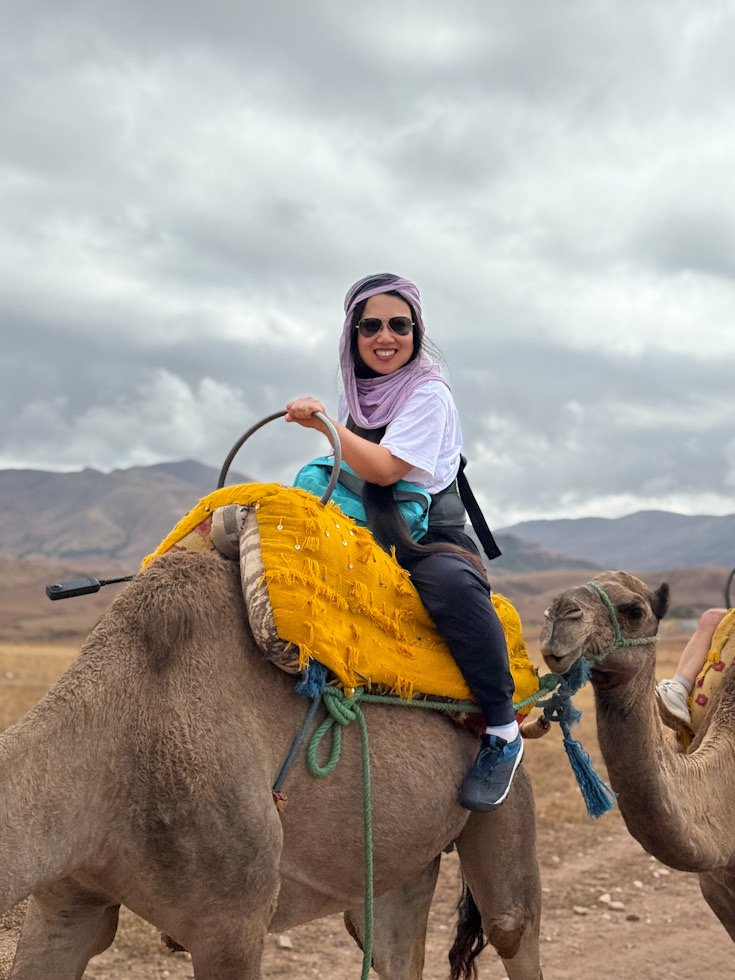
Unlike the Sahara, the Agafay Desert isn’t a sea of towering sand dunes. It’s a rocky, barren landscape made up of rolling hills, stone formations, and dry plateaus and this is where I took my first ever camel ride through the landscape.
What is a camel ride like? It really depends on the animal and mine was having a fit – he kept kicking up his left hind legs so I was holding on tight. Which hilariously left my inner thighs so sore the next day – funny because it took me awhile to figure out why! But overall it was pretty calm and chill – there were a number of little ones riding with their parents and they all loved the experience.
Some great things about this specific experience were Abderrahim helped tie everyone’s scarves (and also that there were scarves available to borrow if you did not have one) plus one of the camel guides went around and took photos along the way.
There were clean toilets here if needed.
Atlas Mountains & Agafay Desert Tour with Camel Ride – Women’s Argan Oil Cooperative
It was a 45-50 minute drive from Agafay Desert through windy roads (note that there were a few people that did start to feel a bit car sick).
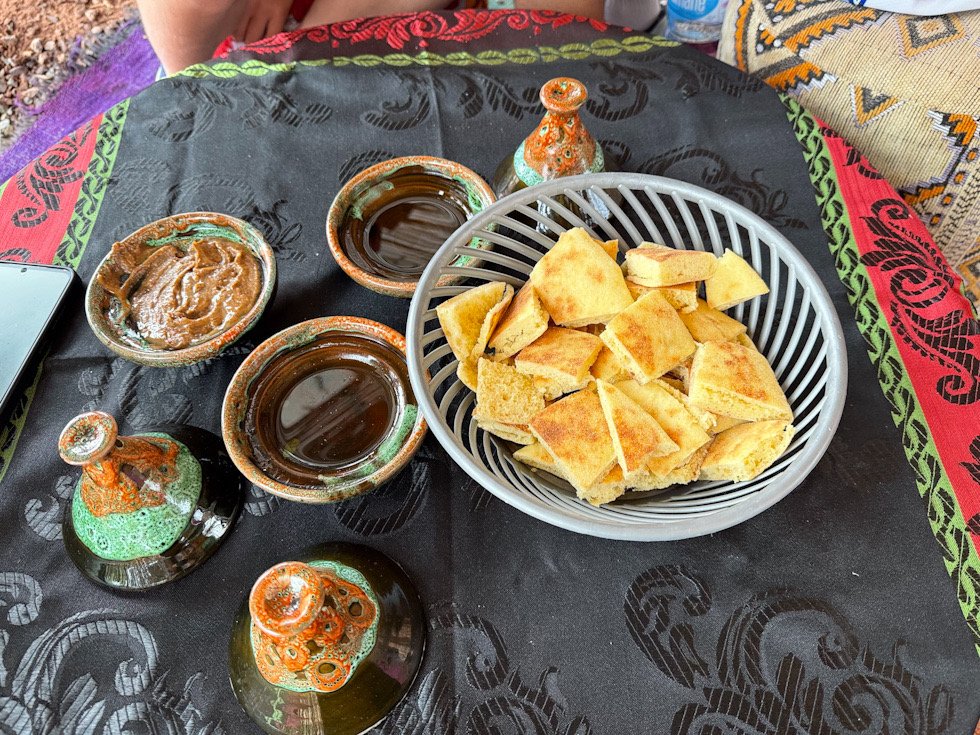
One of the highlights here is visiting a women’s argan oil cooperative, where you can learn how argan nuts are processed to produce the famous Moroccan oil. Argan oil is one of Morocco’s best-known products, used in everything from cooking to skincare and haircare. Seeing how it’s traditionally made adds a little context to all those bottles of argan oil you’ll inevitably come across in Moroccan shops.
We were welcomed with warm mint tea along with baskets of warm bread and three things to dip the bread in.
- Culinary Argan Oil: A rich, golden-brown oil made from gently roasted argan kernels (giving it a distinct, deep, nutty flavor compared to unroasted cosmetic argan oil). You dip the bread directly into the oil.
- Amlou: Morocco’s famous traditional spread, often described as a Berber version of peanut butter. It is made by grinding toasted almonds and culinary argan oil together into a thick paste, then sweetening it with raw local honey.
- Local Honey: Pure golden honey – and is the same that was used in the amlou
Note that this was my favorite collective I visited – first because of the the women who worked there but also that the quality of these ingredients served was significantly higher than on the other tours.
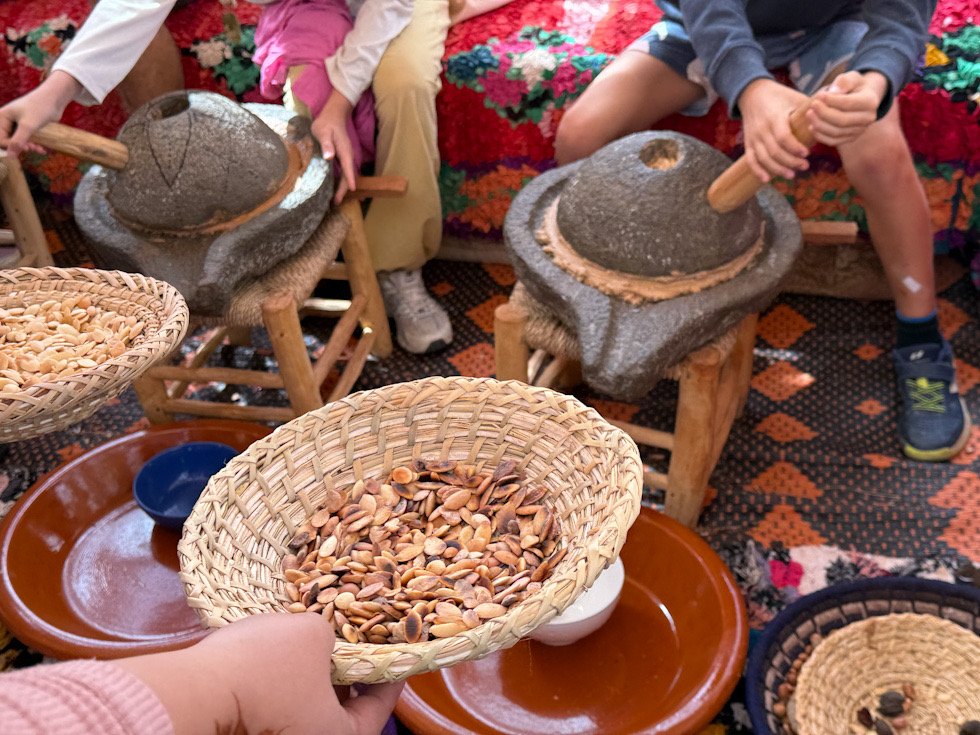
We were then moved to another section where we were able to touch and smell the argan nuts in whole, shelled and roasted forms along with seeing a demo of how argan oil is traditional processed.
Here you can see how the kernels are ground on a traditional stone hand mill with the upper stone turned by a wooden handle and a thick brown paste comes out between the stones. There’s also the opportunity for you to try and/or for a photo op.
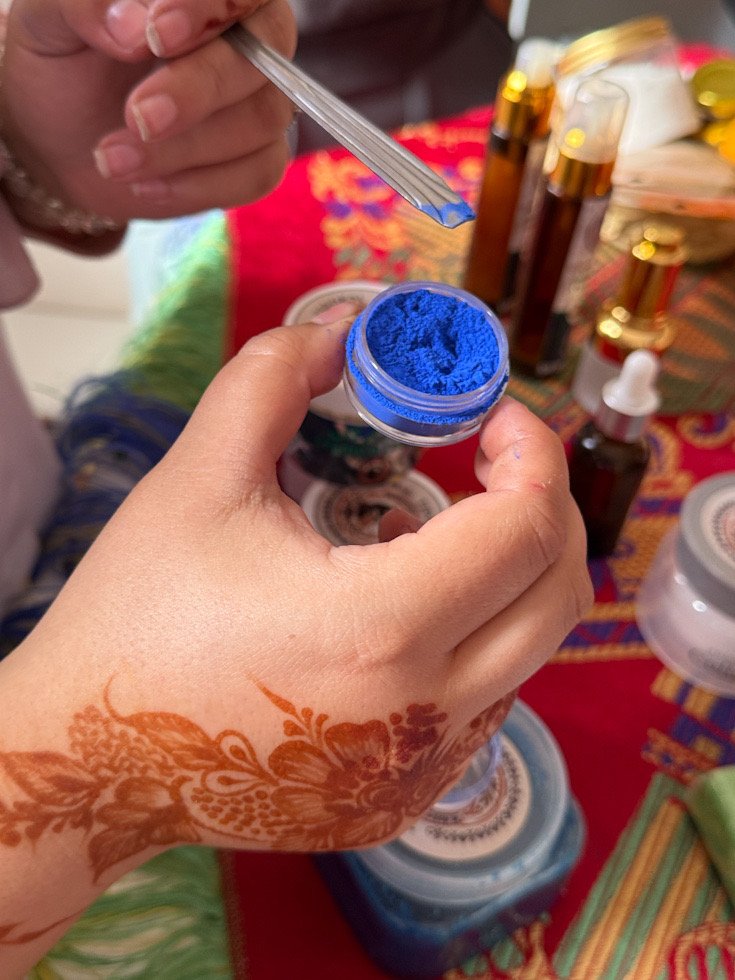
Then there is a showcase of the different cosmetic products available from Argan-infused face creams, body lotions, pure soaps, and hair masks to Savon Beldi (Moroccan Black Soap): Traditional olive- and argan-based gel soaps used in local hammams.
The vibrant blue powder seen in the photo is from the Blue Nila (Nila Zarqa) rock, a traditional Saharan beauty pigment that is used to brighten skin – look at that color!
You also have the chance to shop for culinary products along with other handmade items.
One of the things that I really appreciated about this stop is that it does help support the local economy and helps sustains the cooperatives. Here’s a bit more about why you should consider shopping here:
- Women’s argan oil cooperatives in southwestern Morocco transformed the local argan harvesting into a sustainable, community-driven economy operated primarily by Berber (Amazigh) women
- Economic Independence: Women now own shares in their cooperative and have stable income throughout the year (not just during the harvest season). As importantly, studies have shown that membership has increased incomes by more than ten times compared to pre-cooperative earnings
- Access to Education: Cooperative profits fund literacy and numeracy programmes for members, with measurable improvements in quality of life across communities
- Environmental Sustainability: Cooperatives actively promote sustainable harvesting practices, tree replanting, and environmentally responsible production — helping to reverse the deforestation that previously threatened argan forest ecosystems
- Improved literacy programs funded through cooperative income have brought major improvements in health and quality of life. Studies comparing literate and illiterate Moroccan Berber women have shown significantly better health outcomes among those with access to education – including improved maternal health, child nutrition, and chronic disease management
Lunch on the Atlas Mountains & Agafay Desert + Camel Ride Tour
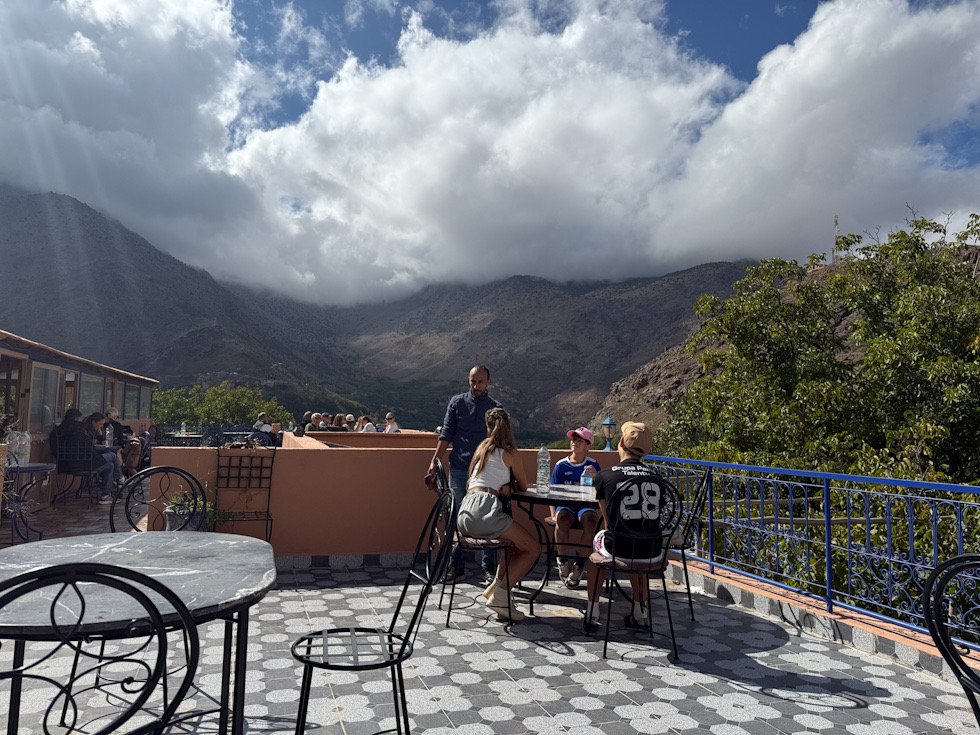
We dined al fresco on an outdoor terrace with gorgeous views with the sun beginning to break through the clouds.
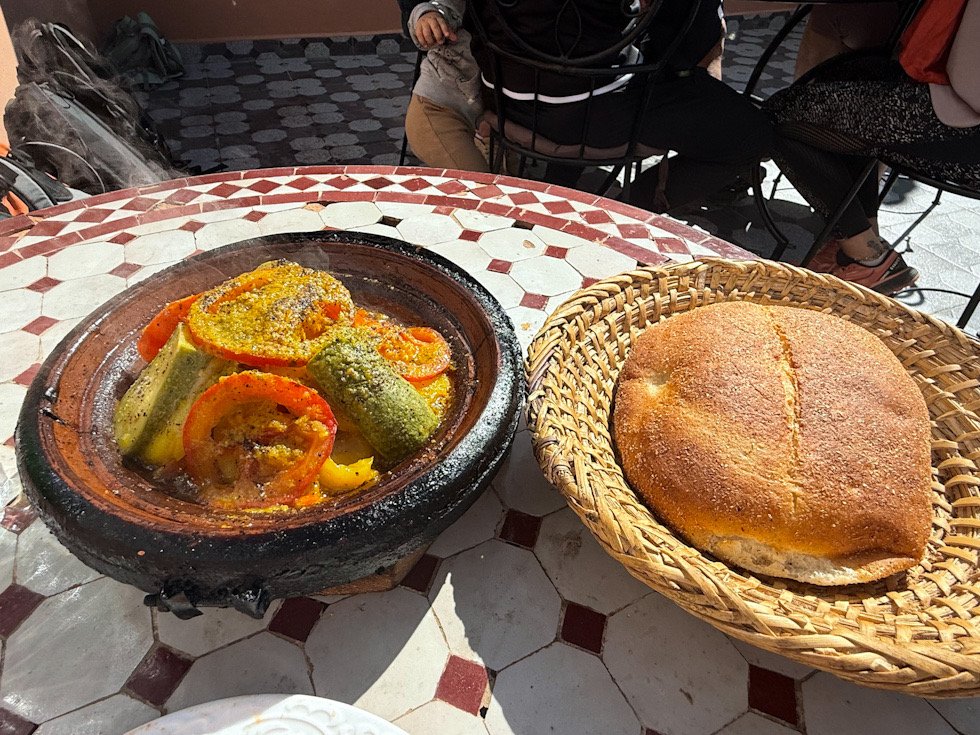
There are varying tagine sizes to accommodate different table/party sizes – at first we were all so confused why I was seated at a table by myself. Bottled water was also brought to the tables.
Lunch was a delicious tagine with chicken, potatoes, zucchini, bell peppers and tomato that was served alongside some fresh bread. We would later learn from Abderrahim that all of the ingredients here were locally sourced. Also included were sides of tomato rice and cucumber slices.
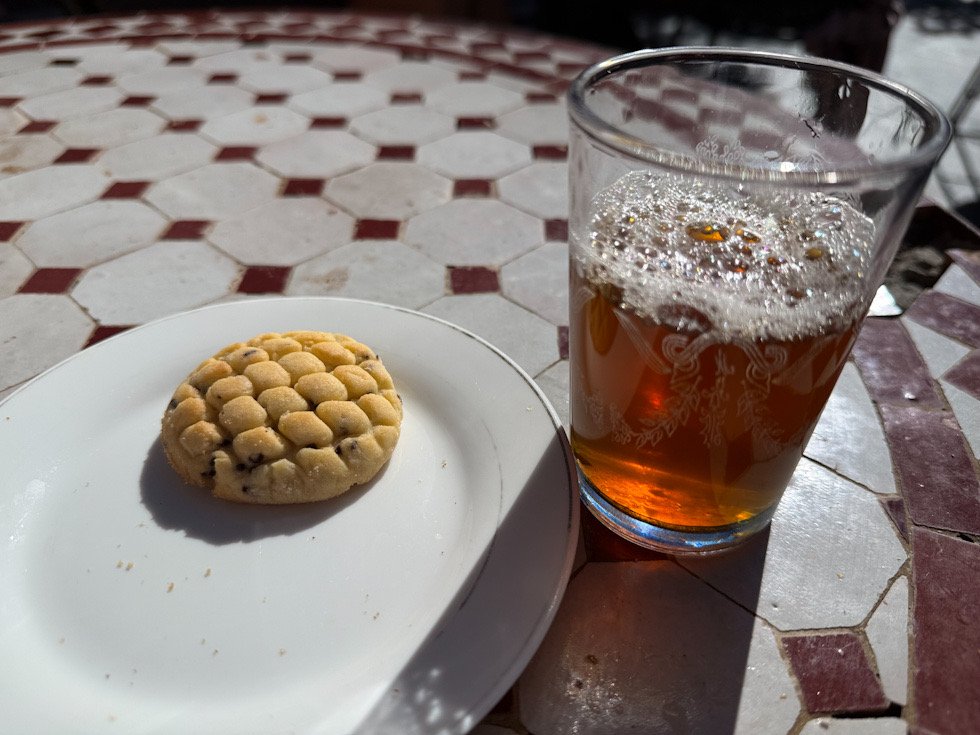
Finishing off the meal was a glass of tea along with a spiced cookie.
Walk Through Town / Ourika Valley
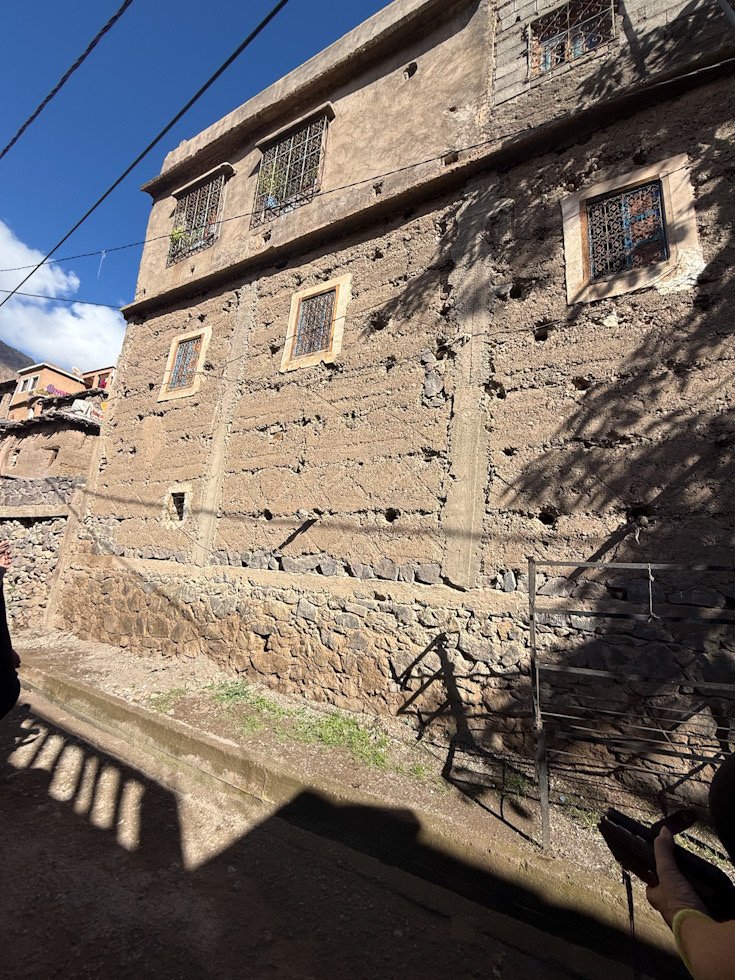
One of the great things about this tour is the emphasis on learning about Berber culture, history, traditions and more and that Abderrahim, our tour guide, was Berber and from the Atlas Mountains. In fact, his family home was 15 minutes away from where we had lunch!
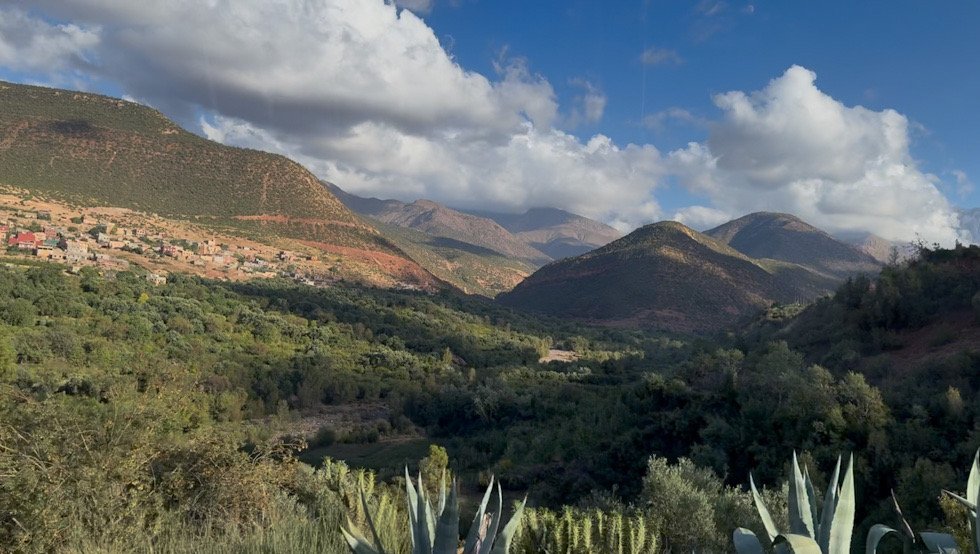
I loved this as it allowed me to get a better appreciation for how people live in the mountains and was really interesting to see the traditional homes, cultivated hillsides, and orchards of cherry and walnut trees.
We learned that expansion of Berber homes happens in an upward direction and seen in this particular house pointed out by our guide.
As the family builds up, the bottom part of the house became where people housed their animals and the family would use the upper portions as living spaces – why there are significantly fewer windows at the bottom.
Depending on the walking portion of your tour, you’ll have opportunities to explore the surrounding paths and take in the views.
Bring your camera. This is the kind of scenery that makes you want to stop every few minutes
Walk/Hike to the Imlil waterfalls
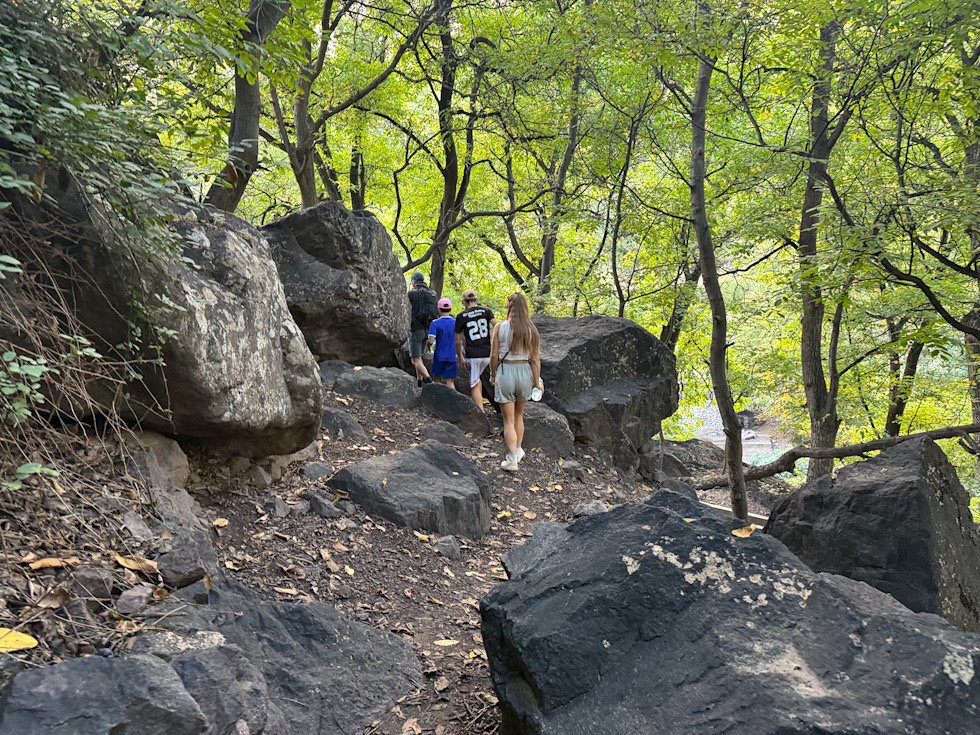
Note that the activity is definitely not a walk in the park: depending on your fitness level, it’s light to moderate walking with uneven and uphill/downhill terrain. And be careful of the plant seen on the left of this photo – the thorns are very sharp
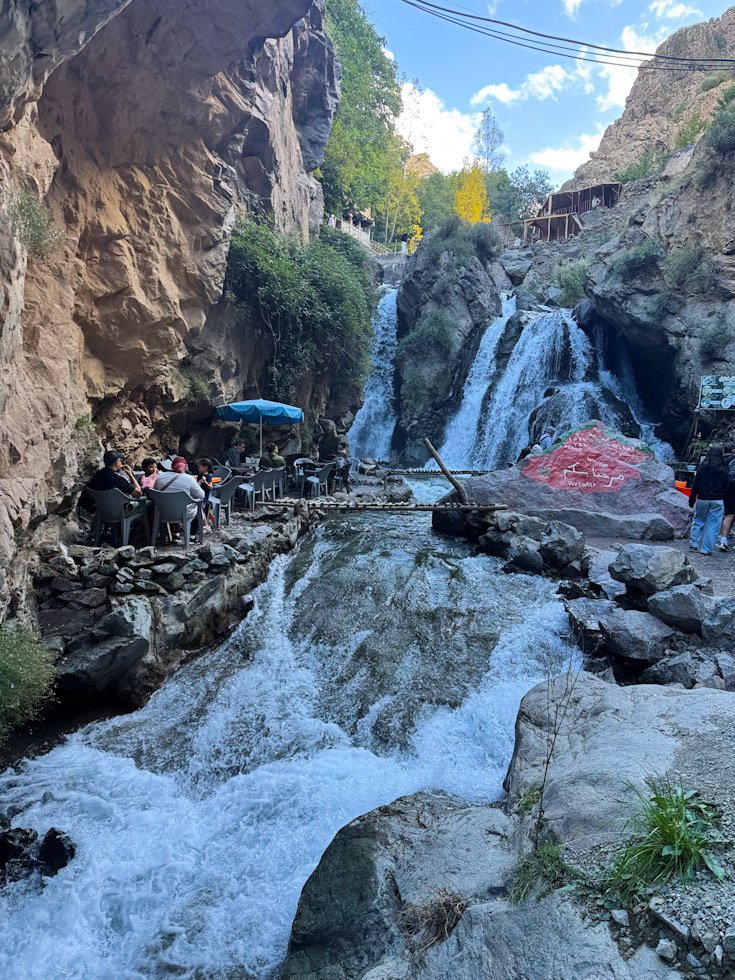
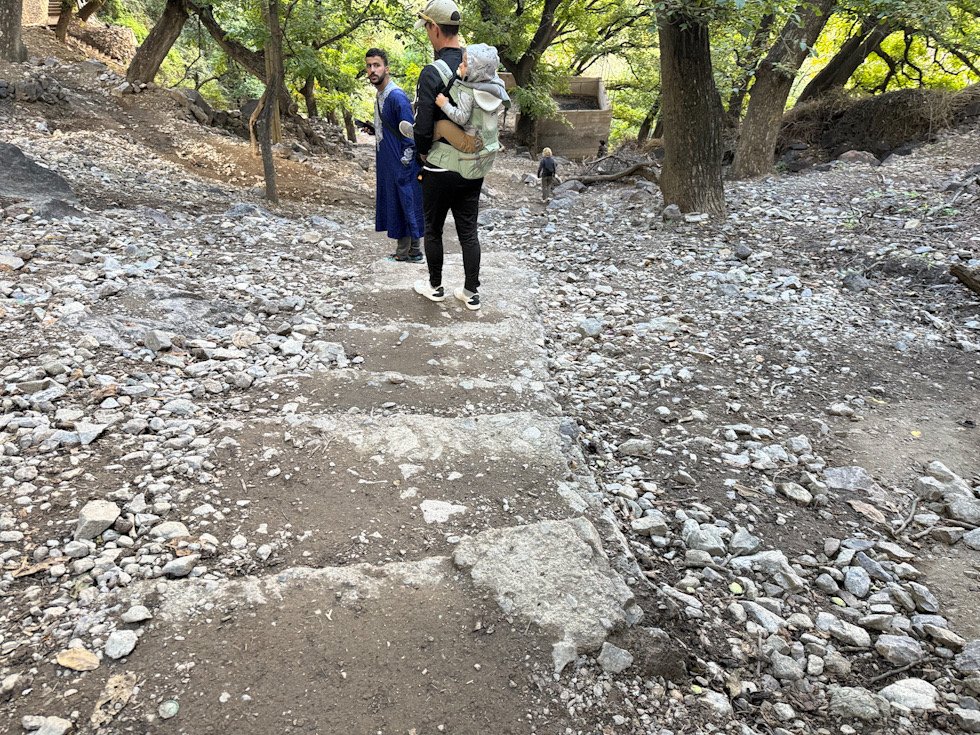
The payoff: a small, scenic cascade with small natural pools that is popular with locals and tour groups alike. Here you can also find local vendors selling fresh-squeezed orange juice and crafts, and small natural pools
We took a short break here for photos and a refreshing orange juice.
Abderrahim was a great guide that spoke multiple language (Arabic, Berber, English and French) who not only was very knowledgeable but also was quite attentive (he noticed when a couple of the kids were struggling to get down from a high rock and helped carry them down)
Here he is checking on the group to see if we needed to take a break to allow everyone to catch up.
We went in the opposite direction that tours normally go as we had a multi-generational French family on the tour (with a little one around 2-3 years to the grandparents) and he said that this way would be easier – and I can see how.
What was our descent would be the ascent and many would count that as a decent hike.
The Drive
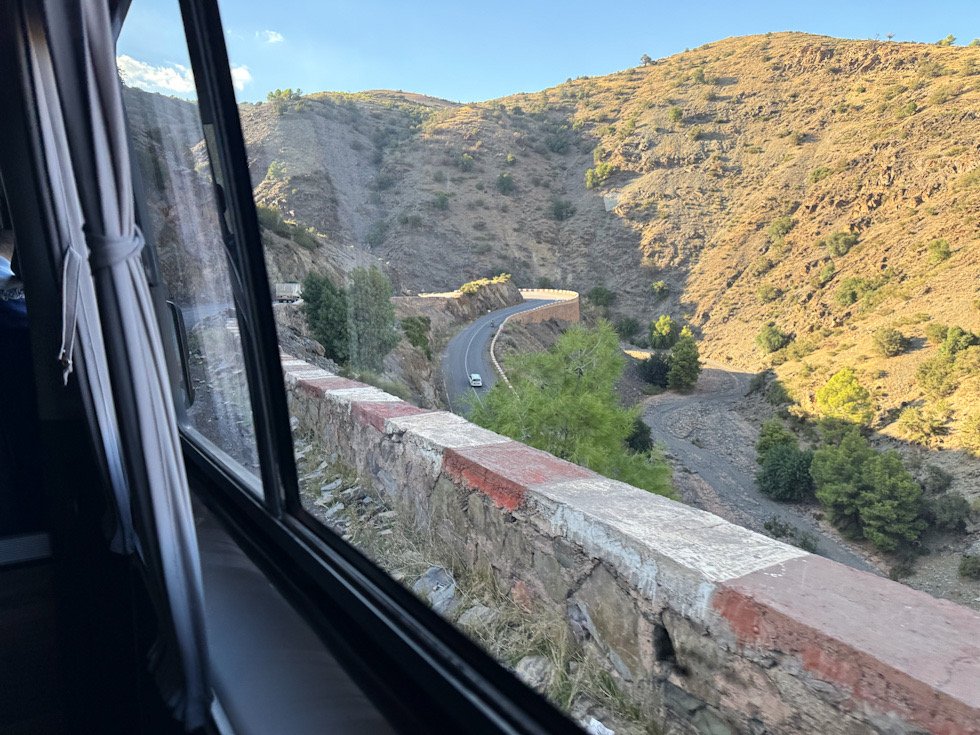
As I pointed out in an earlier section that there were a few people that did start to feel a bit carsick on the ride. It can be a long car ride for many compounded by windy mountain roads. I love how appreciative the French family was to Aziz for being a great driver that navigated the van with ease and comfort – they were constantly thanking and praising him!
Return to Marrakech
With traffic, it took about 1 hour 30 minutes to get back to Marrakech for the first pick-ups.
Atlas Mountains & Agafay Desert Tour with Camel Ride – What to Wear & Bring
- You don’t need specialized hiking equipment for this excursion, but comfortable clothing and appropriate footwear will make the day much more enjoyable.
- Comfortable walking shoes: You’ll encounter uneven paths, dirt, and some uphill and downhill walking. Leave the flip-flops in your hotel.
- Breathable clothing: Especially important during spring and summer.
- Lightweight layers: Particularly during fall and winter when mountain temperatures can be considerably cooler.
- Sun hat and sunglasses: There isn’t much shade in the more exposed areas.
- Sunscreen: The Moroccan sun can be strong even when temperatures feel comfortable.
- Light jacket: Particularly useful during winter and cooler spring or fall mornings.
- If you’re visiting in winter, I’d bring a warmer jacket than you might initially think necessary.
FAQs: Atlas Mountains & Agafay Desert Tour with Camel Ride
- How far are the Atlas Mountains from Marrakech? The Atlas Mountains – Imlil, specifically, is located about 65 km (40 miles) – are located south of Marrakech. The journey generally takes around 1.5 hours by road, depending on traffic, pickup location, and the exact route.
- Can you visit the Atlas Mountains and Agafay Desert in one day? Yes! That’s exactly what makes this excursion appealing. The approximately nine-hour itinerary combines several stops in the Atlas Mountains region with a visit to Agafay before returning to Marrakech.
- Is Agafay Desert the same as the Sahara Desert? No. Agafay is a rocky desert with hills, stone formations, and dry plateaus. The Sahara is famous for its expansive sand dunes.
- Agafay is much, much closer to Marrakech, making it possible to visit on a day trip.
- Is the Atlas Mountains tour difficult? This particular excursion is designed more around sightseeing and cultural experiences than serious hiking. However, there is walking on uneven terrain, including uphill and downhill sections. Comfortable walking shoes are important.
- Is a camel ride included? On some tours, there is an option to add a camel or horse ride – make sure you select the option that includes the activity when reserving.
- What should I bring on the excursion? Bring comfortable walking shoes, sunscreen, sunglasses, a hat, water, and clothing appropriate for the season. A light jacket is useful because the mountains can be considerably cooler than Marrakech.
- Can children take this tour? The experience is not specifically restricted to adults, but consider the full-day duration and walking requirements before booking with younger children.
- On my tour, a multi-generation French family booked and they had 7 kids ranging from 2-3 to 12 years old as well as a Polish family with 2 older boys and they all enjoyed the tour and all fell fast asleep on the bus ride back to Marrakech
- What is the best time of year to visit the Atlas Mountains? March through May and September through November generally offer the most comfortable conditions for sightseeing and walking. Summer can be extremely hot in Agafay, while winter brings colder temperatures in the mountains.
- Do you need to book the Atlas Mountains and Agafay Desert tour in advance? I’d recommend booking ahead, particularly during the popular spring and fall travel seasons. Check the available group sizes and departure options when reserving.
Good to Know Before Booking Atlas Mountains & Agafay Desert Tour with Camel Ride

- This is a full-day excursion – Plan on approximately nine hours, including transportation and sightseeing. Don’t schedule another major activity immediately afterward.
- Check What’s Included: Not all tour packages include lunch, Agafay Desert, camel/horse rides (but the one in this post that I went on does)
- The itinerary can change. The order of stops may be adjusted depending on group logistics and conditions as demonstrated in this post. The advertised itinerary is a guide rather than a guarantee that every stop will happen in precisely the same order.
- Expect some walking. While this isn’t a strenuous mountain trek, the tour does involve uneven ground and uphill and downhill walking. It may not be suitable for travelers with mobility limitations.
- Bring some cash. It’s useful for optional purchases, souvenirs, and tipping your guide or driver if you choose.
- Dietary requirements should be communicated in advance. The tour provider says dietary restrictions will be accommodated as best as possible. If you have specific requirements, contact them before the excursion.
- Note That Pickup is Confirmed the Evening Before : Operators commonly confirm the precise pickup time and location closer to departure and communication is done via Whatsapp
- For Pickup: Have phone available, check your messages and make sure the driver can reach your meeting point.
- Set an alarm, charge your phone, and have your clothes ready the night before.
Who Should and Shouldn’t Consider the Atlas Mountains & Agafay Desert Tour?
What makes this excursion appealing is the combination of experiences. You aren’t simply visiting a viewpoint or spending the day riding a camel. You’re getting a little bit of mountain scenery, local culture, traditional food, and a completely different landscape in Agafay.
Best for:
- First-time visitors to Marrakech.
- Travelers who want to experience more than the city.
- People interested in Moroccan culture and traditional villages.
- Anyone wanting mountain scenery without a demanding hike.
- Travelers who want to combine a desert experience with other sightseeing.
Not good for:
- Anyone looking for an extensive mountain trek.
- Travelers expecting Sahara-style sand dunes.
- People who don’t enjoy full-day group excursions.
- Anyone who struggles with walking on uneven terrain.
Final Thoughts: Add the Atlas Mountains & Agafay Desert Tour with Camel Ride to Your Marrakech Itinerary!
Marrakech is an incredible city, but Morocco has so much more to offer beyond its medina. If you have a spare day, venturing into the Atlas Mountains and Agafay Desert is a great way to experience the country’s landscapes, culture, and hospitality.
And the best part? You can experience several different sides of Morocco without having to plan a complicated itinerary yourself. Ready to explore beyond Marrakech?
Book This Tour Through GetYourGuide
This was the exact tour that I took Atlas Mountains & Agafay Desert Tour with Camel Ride through GetYourGuide
Why You Should Choose to Book Via GetYourGuide
Want to save 5% on a GetYourGuide activity or excursion? Eligible on first booking in app with discount code: BEAUTLIFEWORLD5.
For more on the discount code specifically, read this and on GetYourGuide in general, read this
If You Want to Book This Tour Via Viator Instead?
About Author
Rosemary is a travel hacker, points nerd, money maximizer, and female solo traveler who’s explored 70+ countries without a trust fund, sugar daddy, or sponsored content. Every mile, upgrade, and trip is completely self-funded using a mix of points, miles, and cash or earned with elite status.Through firsthand experience and plenty of trial and error, she teaches everyday travelers the art of travel hacking ie how they too can travel for cheaper, better, and more often (and she provides receipts along with a mildly concerning amount of spreadsheets)
While Rosemary doesn’t take herself too seriously, she does take award travel, making her money work harder (and searching for the best ice cream) seriously – and shares it all here because she believes that seeing the world or living your most beautiful life shouldn’t be reserved for the rich, the retired, or content creators with brand deals.
When not traveling, she is based in Denver, Colorado and loves to share the amazing things you can do, see, and experience (many of which are free!) in the Centennial state (which she feels absolutely blessed to be able to call home)