Hassan II Mosque in Casablanca: Tickets, Tours, Visiting Hours & What to Expect
If you find yourself in Casablanca, you absolutely should visit the Hassan II Mosque. And while the exterior is impressive especially with the building perched dramatically on the Atlantic coastline, take a couple hours of your day to venture inside.
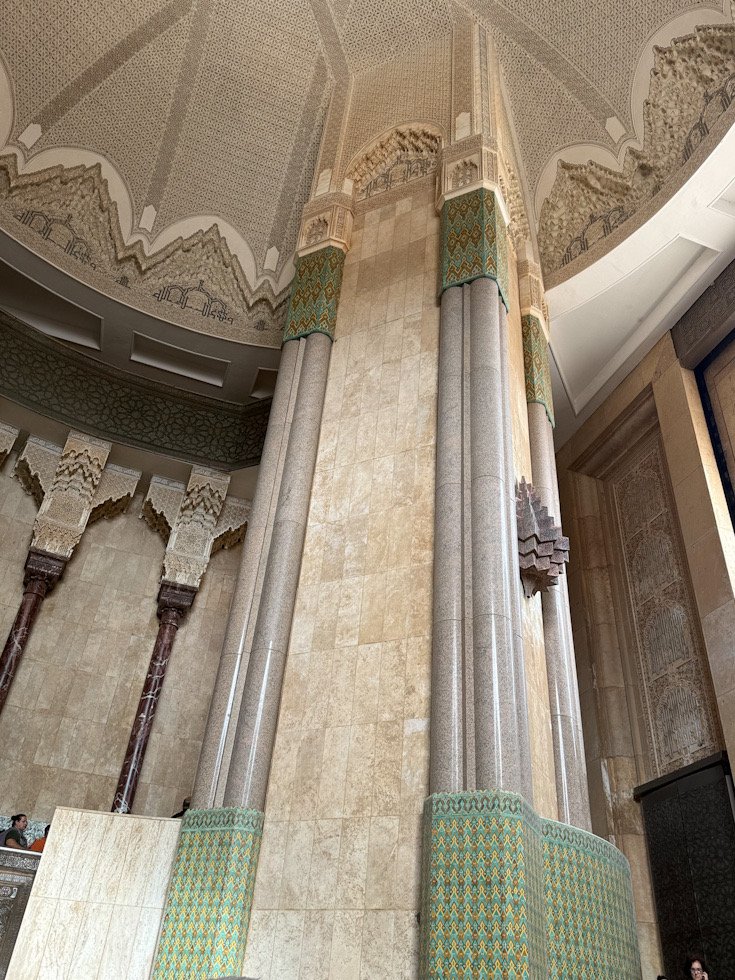
Morocco is famous for its traditional decorative arts, and the Hassan II Mosque brings together an extraordinary collection of them. Intricate zellige mosaics, hand-carved plaster, elaborate cedar woodwork, marble, copper, and other traditional details are incorporated throughout the building.
And what makes this mosque particularly special for travelers is that, unlike most mosques in Morocco, non-Muslims are welcome to visit the interior – with one very specific condition. Whether you’re visiting Casablanca for business, stopping here on a cruise, or including it in a longer Morocco itinerary, here’s everything you need to know about visiting Hassan II Mosque.
Please note: this post contains affiliate links which means if you buy something following a link on this page, I may get a small commission. As an Amazon Associate, I earn from qualifying purchases. This is absolutely free for you/does not cost you anything extra! There’s no sponsored content nor do I run ads here so this helps so much in reducing the ever-increasing costs of keeping this site active.Thanks! Rosemary
A Brief History of Hassan II Mosque
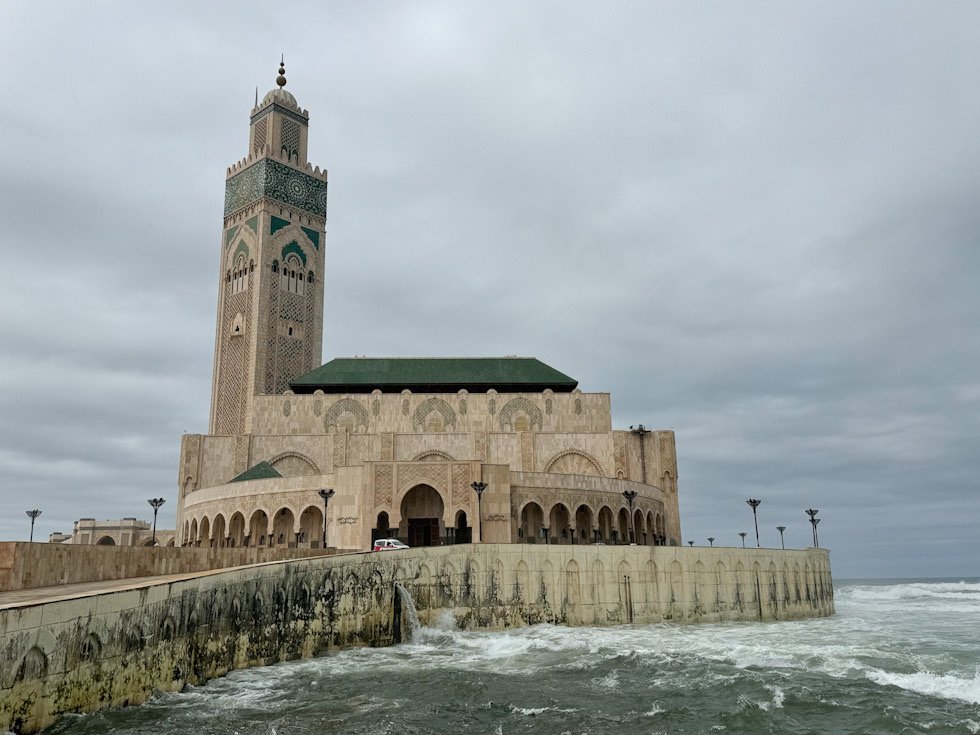
The Hassan II Mosque was commissioned by King Hassan II with construction beginning in 1986 and inaugurated on August 30, 1993.
The project brought together French architect Michel Pinseau and thousands of Moroccan craftsmen and artisans. The idea was to create a monumental mosque that celebrated Morocco’s religious heritage while showcasing the country’s extraordinary traditional craftsmanship.
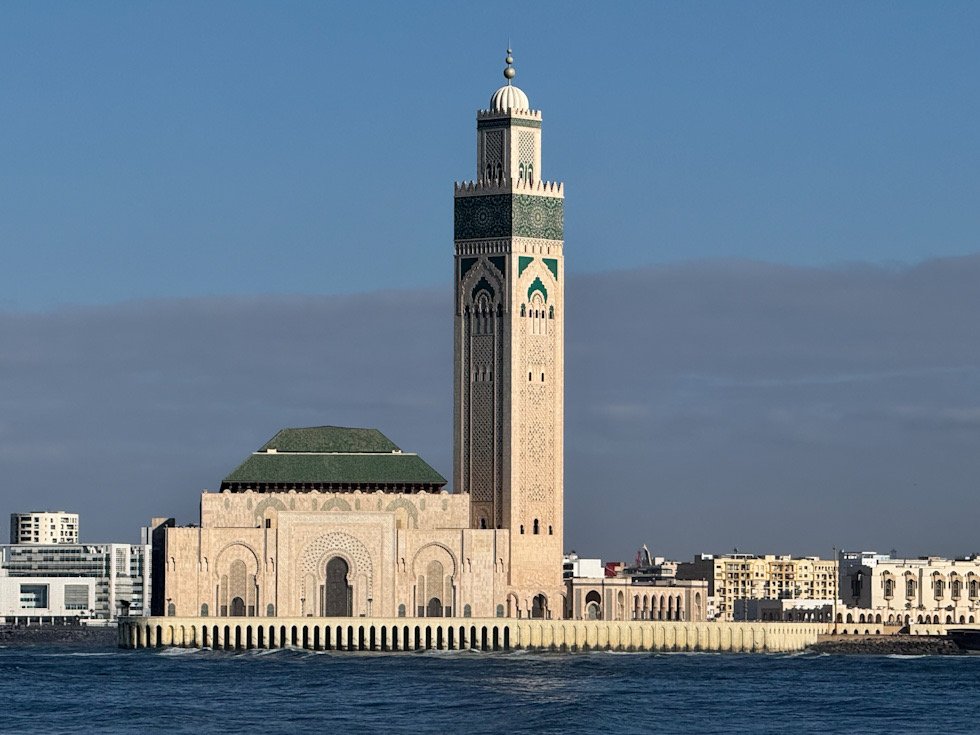
Its location over the Atlantic Ocean was intentional. The design was inspired by a Quranic reference to God’s throne being upon the water, creating a symbolic connection between the mosque, the ocean, and the heavens.
One of my favorite facts I learned about the Hassan II Mosque was in regards to funding. The king contributed 1/3 of the cost from royal funds and the remaining 2/3 came from voluntary contributions from the Moroccan people, reflecting the importance of the project to the country.
This showcases why today, Hassan II Mosque is not only an active place of worship but also an important cultural and architectural landmark not only for Casablanca but for Morocco.
HASSAN II MOSQUE LOGISTICS
Location:
Boulevard Sidi Mohamed Ben Abdellah,
Casablanca, Morocco
Because the mosque is an active place of worship, the only way to access the interior as a non-Muslim is on a guided tour
Admission
Non-Muslim visitors must purchase a 140 MAD admission ticket *Note that admission includes the guided tours
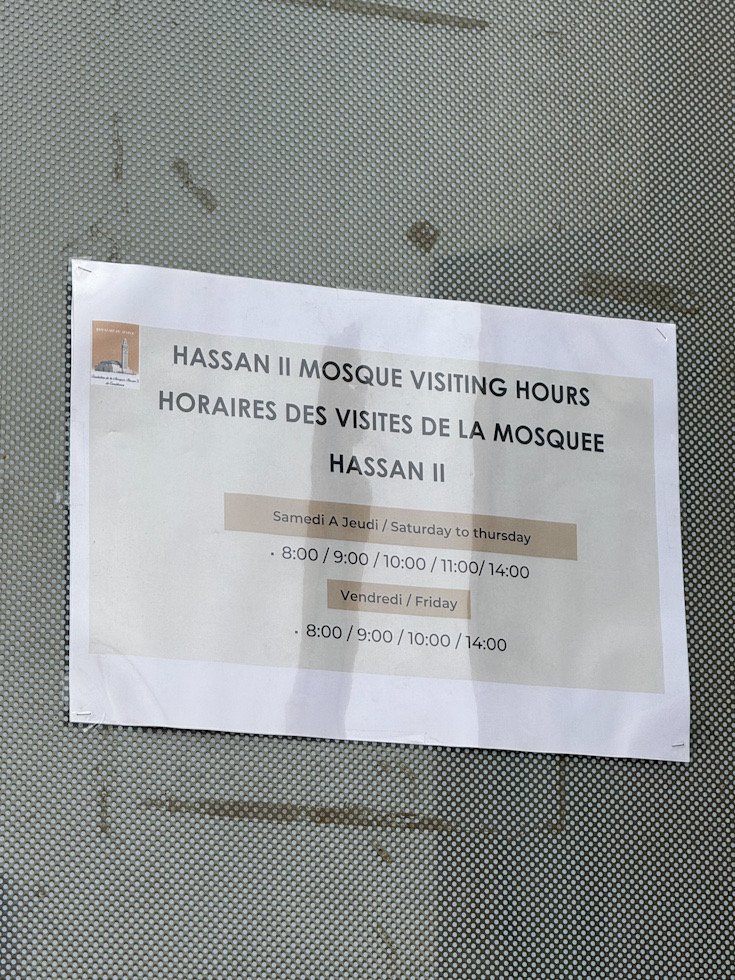
Guided Tour Times
Between September 16th and March 14th
Saturday – Thursday
09:00, 010:00, 11:00, 14:00
Fridays*
08:00, 09:00, 10:00, 14:00 *AM tours are frequently canceled
Guided Tour Times
Between March 15th and September 15th
There is an additional afternoon guided tour at 15:00
During Ramadan, the tours occur between 09:00 and 11:00 *but subject to cancellation
Hassan II Mosque Ticket Prices
| Visitor Category | Admission Price |
| Children under 6 | Free |
| Children over 6 and Moroccan students | 30 MAD |
| Moroccan residents and foreign students | 70 MAD |
| Foreign adults | 140 MAD |
| Private VIP visit (10 people or fewer) | 2,200 MAD |
How to Visit (Registration and Tickets)
Prices are published by the Hassan II Mosque Foundation and are subject to change. Check the official website before your visit.
You cannot purchase these tickets only and are available for purchase in person at the Hassan II Mosque museum with recommendations to get there 45 minutes before (as bus groups can fill the queue quickly!)
If you don’t want to queue for tickets, you can skip the line with these tickets or book the Casablanca City Tour with Hassan II Mosque Ticket Included – here’s my review/guide of the tour.
SCAM ALERT: Ignore the menu outside the complex that claim the mosque is closed or offering private tours (official tours are pre-arranged or bought in the ticket office)
How To Get To Hassan II Mosque
The mosque is located along Casablanca’s Atlantic coastline, west of the Old Medina. It’s relatively easy to reach from the city center, but your best transportation option will depend on where you’re staying.
- By (small red) Petit Taxi: Provides the most direct route and can drop passengers right at the complex after a 15-minute ride from the city center. Flag one down and have the driver reset the meter. If the meter is broken, negotiate a flat rate of 15 to 30 MAD before getting inside the vehicle
- By tram: Casablanca has an extensive tram network, but the mosque isn’t directly beside a central tram stop.
- United Nations Square is the closest convenient stop on Line T1 (add on a 20-minute walk through the city streets to reach the mosque gates)
- From Casablanca Cruise Port: Hassan II Mosque is approximately 3 kilometers from the cruise port, making it one of the most convenient major attractions to visit during a Casablanca port call. A taxi or organized shore excursion is the easiest way to get there.
Dress Code + Rules of Conduct
Because Hassan II Mosque is an active place of worship, there are specific dress and behavior requirements.
What Should You Wear?
- Both men and women are required to wear clothes that cover the shoulders, torso and come below the knees. Shorts and sleeveless clothes are absolutely forbidden.
- For women, headscarves are optional.
- You will need to remove your shoes at the start of the tour
- Wear socks for this reason
- Note that there isn’t a place to sit besides the floor so opt for shoes that are easy to take off and put back on.
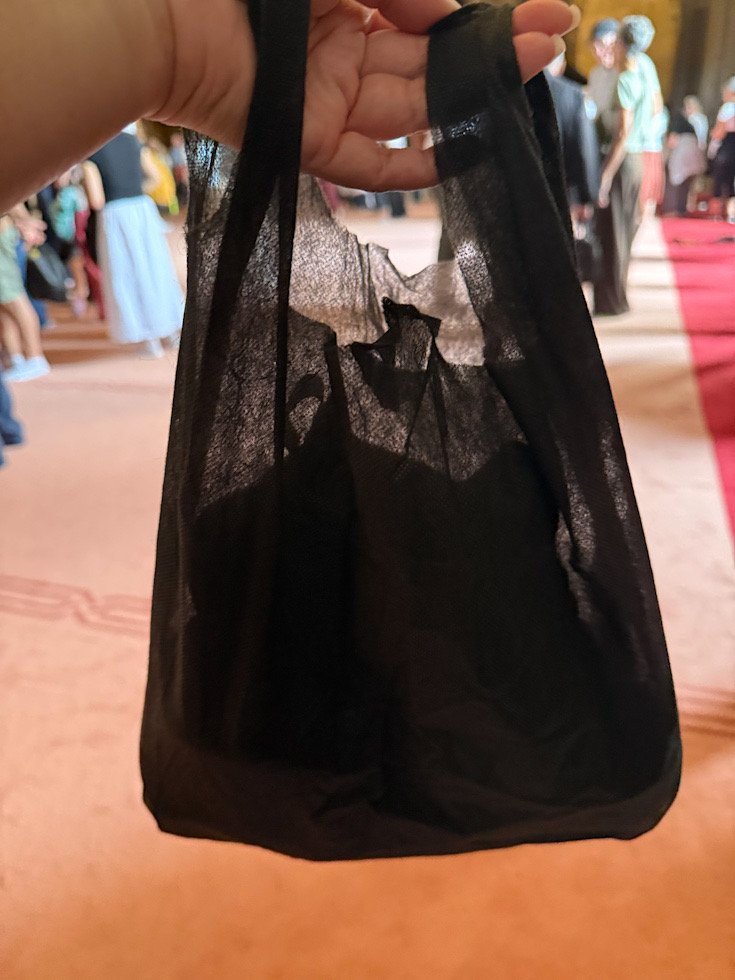
- Bags are provided for you to carry them
During your visit, you’ll also need to:
- Remain with your guided group.
- Respect the scheduled tour times.
- Keep noise to a minimum.
- Avoid eating, drinking, or smoking during the visit.
- Follow all safety instructions and stay within designated visitor areas.
Can You Take Photos Inside Hassan II Mosque?
Still photography is generally permitted during the guided visit but always follow your guide’s instructions and remain with your group.
Video cameras and audio-recording devices are prohibited inside the mosque.
My Experience Visiting the Hassan II Mosque
I visited the mosque as part of an incredible city tour of Casablanca (For the full review and guide, read this)
I cannot recommend this enough if you only have one day in Casablanca, this is the tour to take!
A Note About The Guided Tours
First thing to note is that if you do a late morning or afternoon tour, there is a very good chance that your tour and the mosque will be crowded!
While we were able to skip the line for the entrance tickets, there was a lot of waiting as the tour guides figured out who would be with which guide. It wasn’t clearly communicated when groups were combined and who was supposed to go with whom especially since it was being done as we were walking across the courtyard to the mosque.
Part of the constant reshuffling was that more and more people were joining tours and it was figuring out which languages needed more guides and which needed less as there were tours conducted in Arabic, English, French, German, Italian, and Spanish (and maybe more, but those were the languages I could recognize)!
After entering the mosque, we were given black bags to store our shoes as you need to take them off before stepping on the carpeted areas
The official guided tour takes visitors through three main areas of the mosque complex.
Hassan II Mosque Tour – The Main Prayer Hall
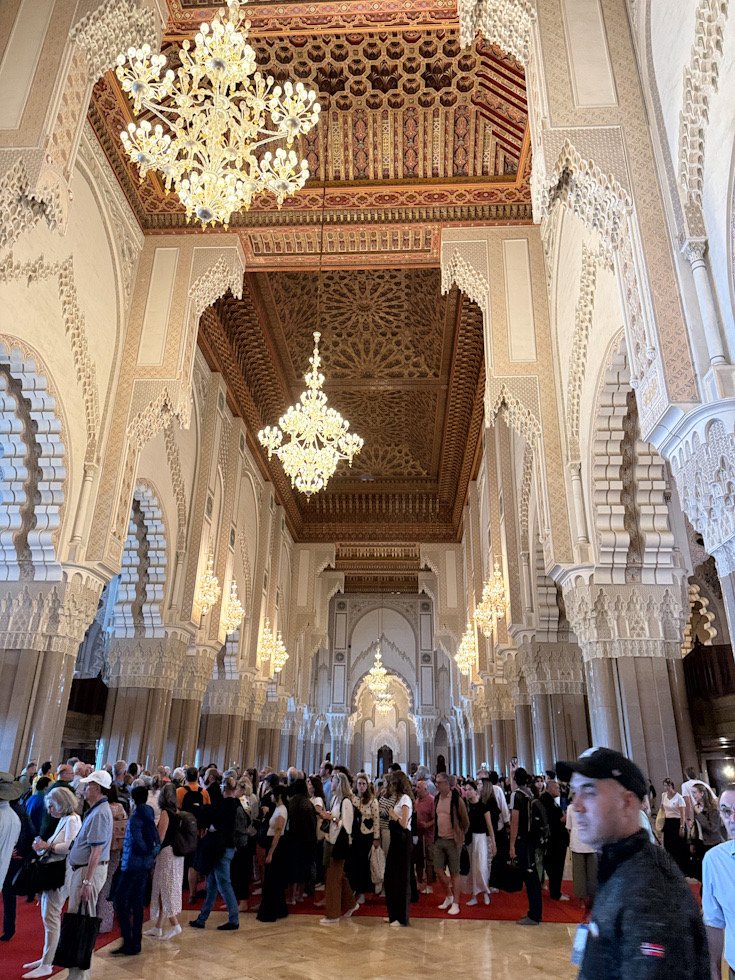
As you can see in the photo with multiple people, the prayer hall is enormous, measuring approximately 200 meters (656 feet) long, 100 meters (328 feet) wide, and 60 meters (197 feet) high.
It can accommodate around 25,000 worshippers.
The sheer size is impressive, but what really makes it special is the level of detail throughout the space.
Moroccan Materials
The cedar wood comes from the Middle Atlas mountains and is used in the carved ceilings, doors and interior paneling
Intricate carvings and painted geometric motifs were completed by artisans from Fez.
Marble from Agadir is used throughout the mosque
Granite for Tafraoute was used for the foundation, exterior cladding and paving.
Take A Closer Look At All of the Traditional Moroccan Craftsmanship
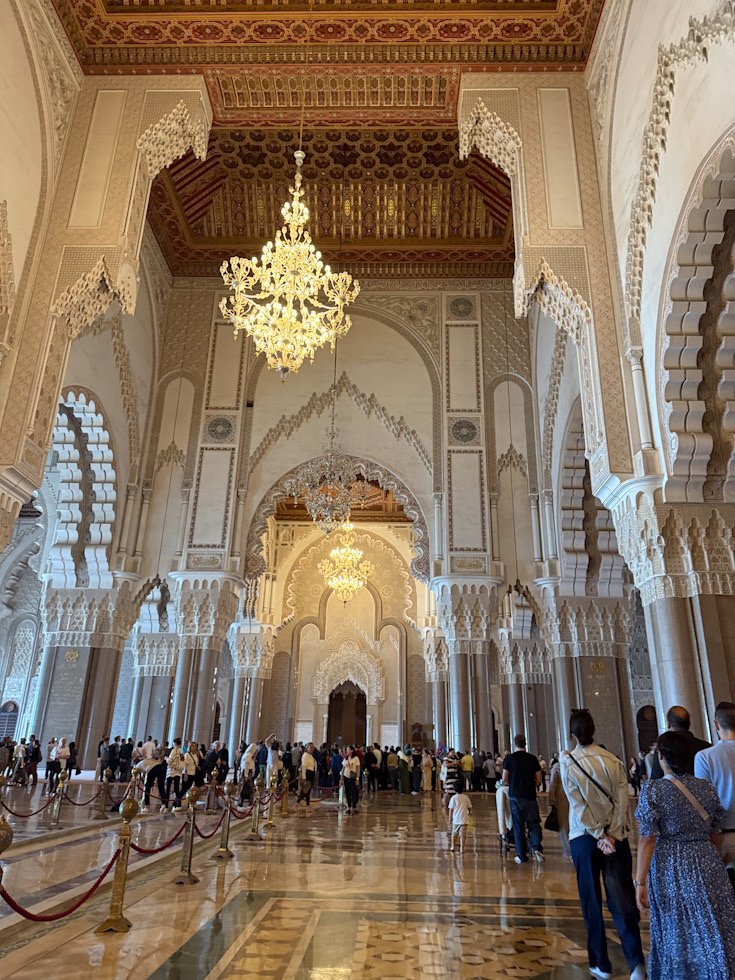
One thing I would recommend is taking your time to look around. There’s so much happening architecturally that it’s easy to focus on the overall size and miss some of the smaller decorative details.
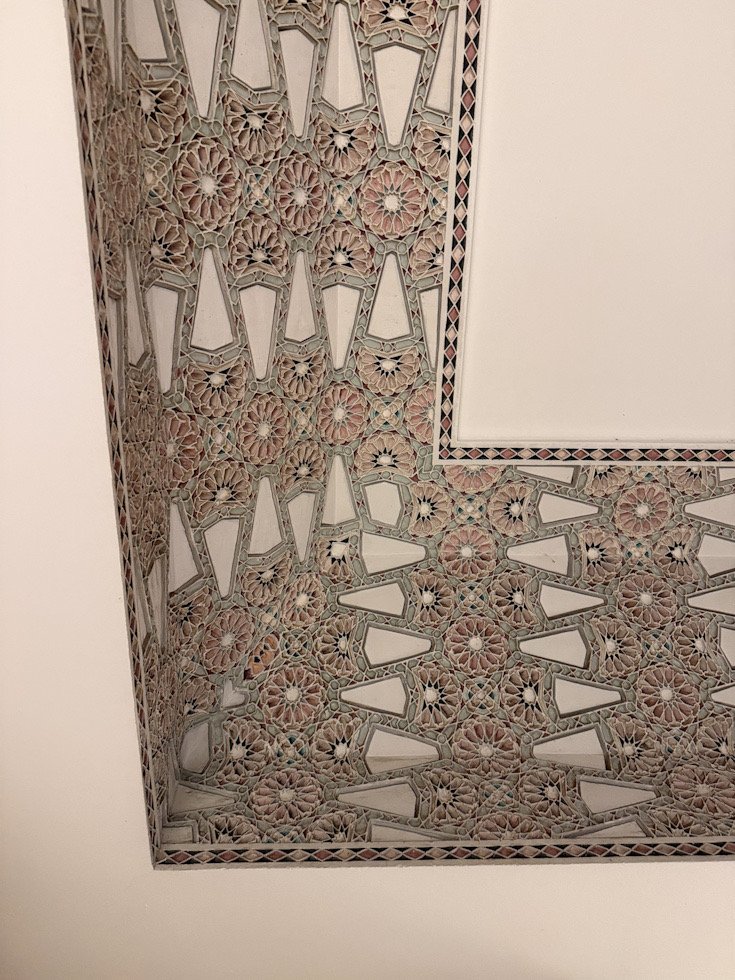
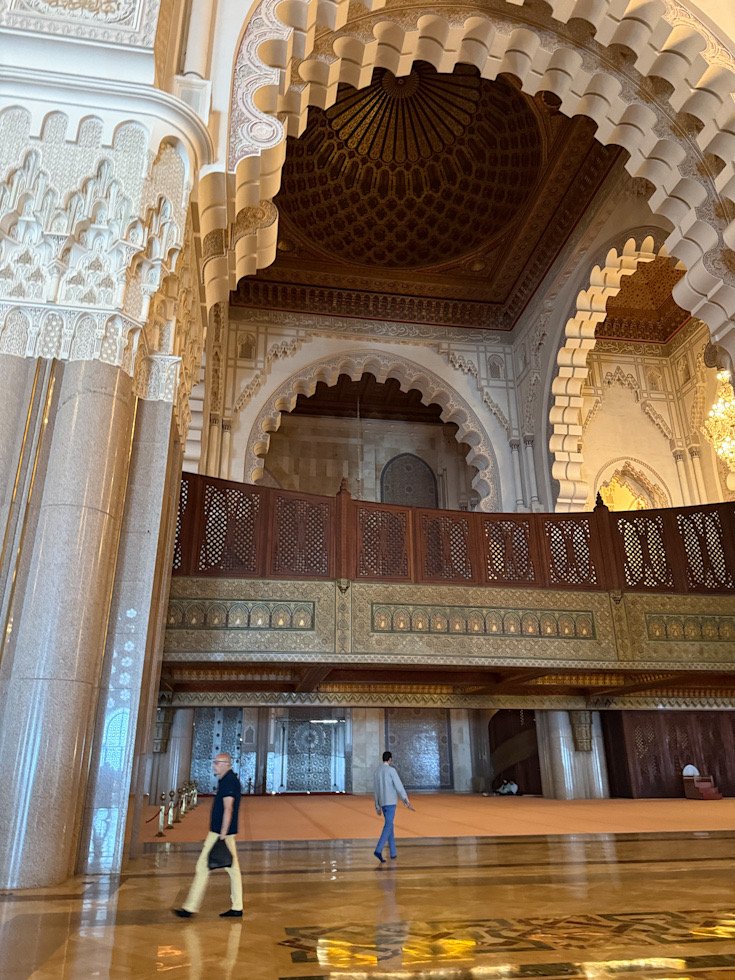
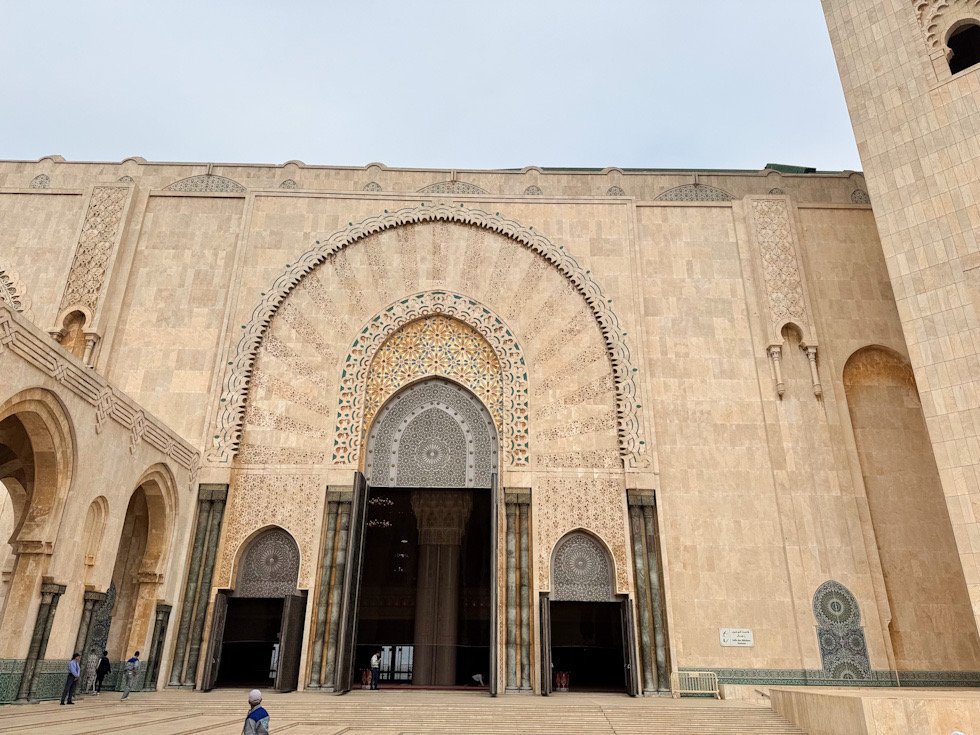
The mosque is a showcase of traditional Moroccan decorative arts on an enormous scale. Look for:
- Zellige: Intricate geometric mosaics made from individually cut and assembled tiles.
- Cedar wood: Beautifully carved and decorated wooden ceilings and details.
- Copper: Decorative metalwork incorporated into the building’s details.
- Carved plaster: Elaborate decorative plasterwork covering walls and architectural features.
- Marble: Used throughout the mosque, including its floors and columns.
- Tadelakt: Traditional Moroccan polished plaster with a smooth, almost stone-like finish.
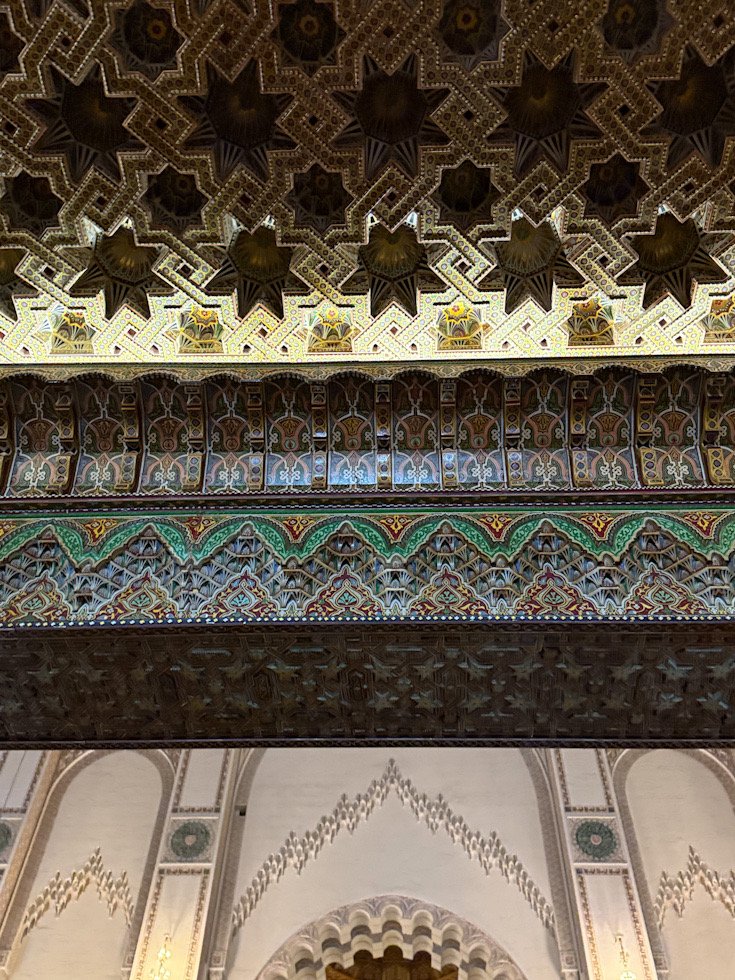
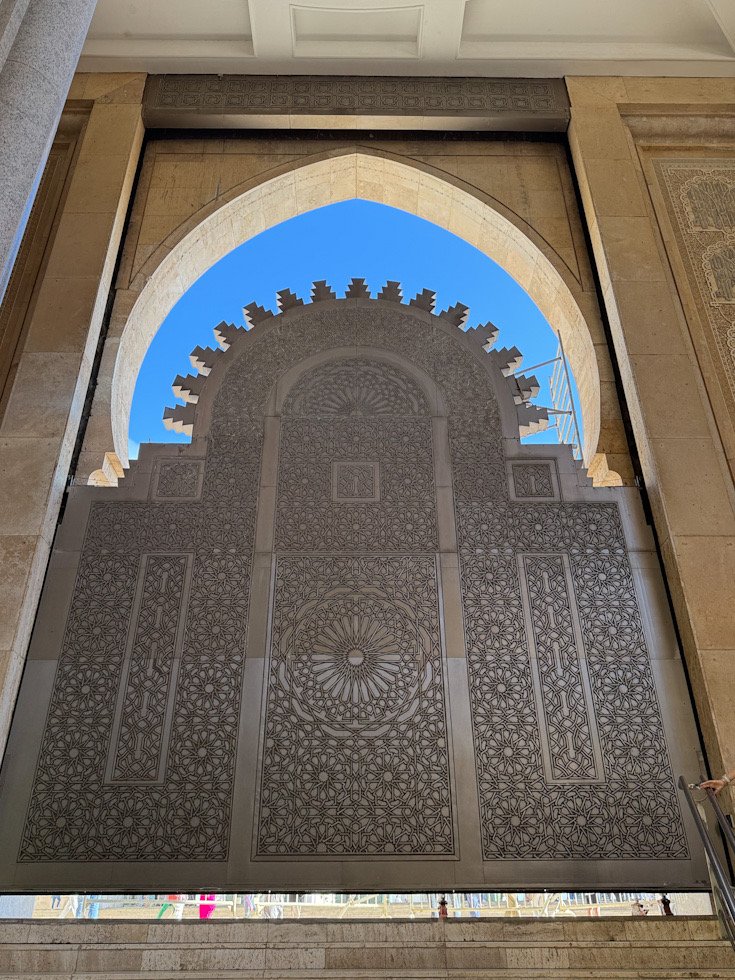
The amount of craftsmanship involved is extraordinary. These aren’t simply decorative touches added to an otherwise ordinary building. They’re an essential part of the architecture itself.
And I personally was obsessed with the doors. Beautiful and functional. Clad in titanium and brass as protection against saltwater oxidation and corrosion. But still hand-engraved embossed with geometric motifs by master Moroccan artisans.
The side doors were designed to be used as part of the mosque’s ventilation system
And Also Look At Those Chandeliers…
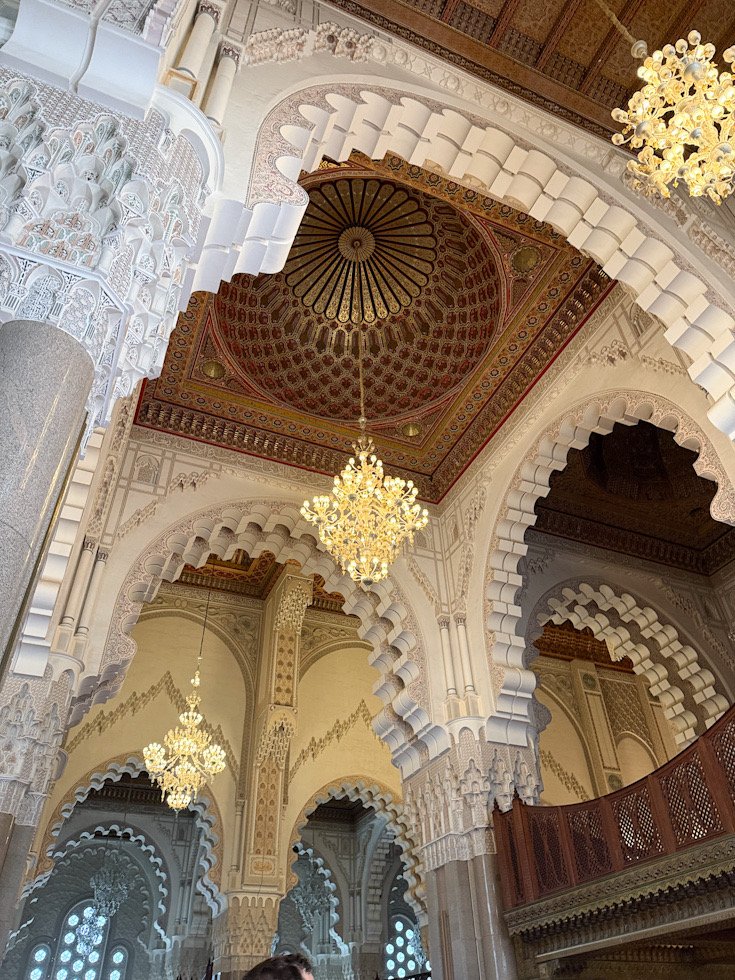
Look up! The prayer hall features 50 large Murano glass chandeliers, some measuring approximately six meters in diameter and ten meters in height and with the largest one weighing 1,200 kilograms. They’re enormous, beautifully detailed, and another example of how the mosque combines impressive scale with intricate design.
The Retractable Roof
One of the most fascinating features of the mosque is its retractable roof.
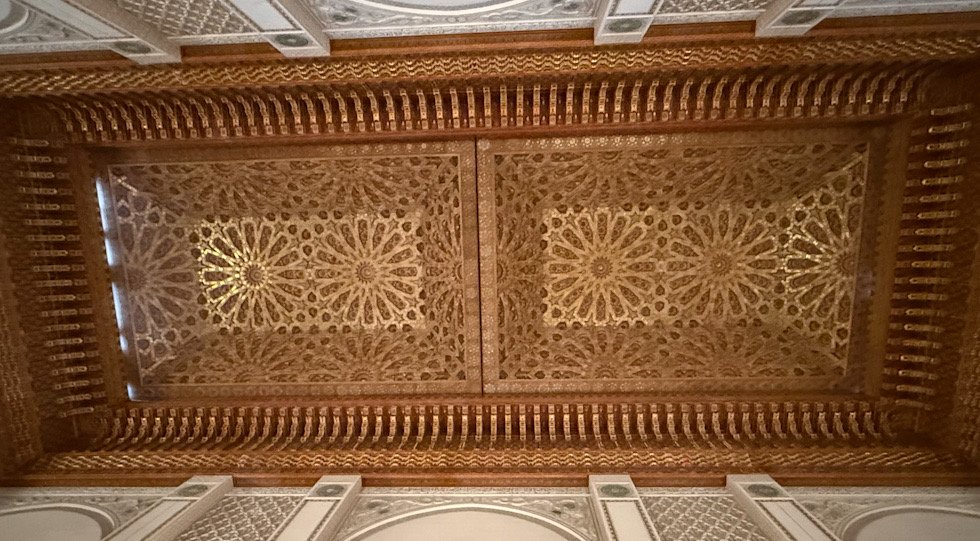
The roof covers approximately 3,400 square meters and can open in about five minutes, allowing natural light and fresh air into the prayer hall.
This is a pretty remarkable engineering feature, especially when you consider the size of the building. It’s also a wonderful example of how the mosque incorporates modern technology without sacrificing traditional Moroccan architectural design.
Note that the roof remains closed during tourist visits and is typically only opened during special religious occasions or exceptionally crowded prayer times.
Hassan II Mosque Tour – The Minaret Hall
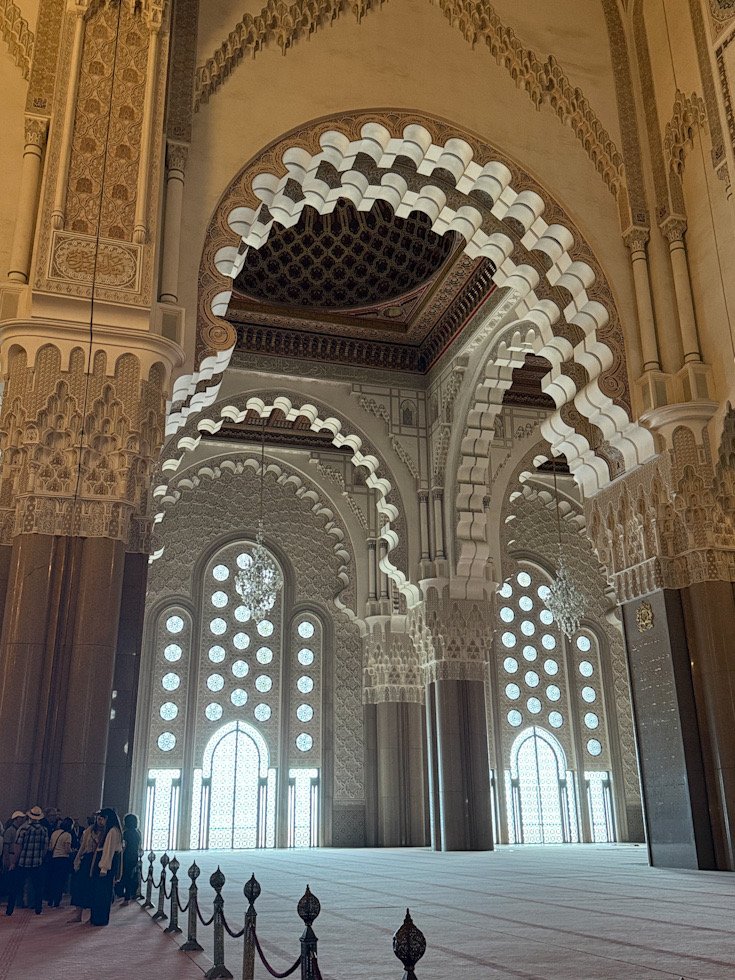
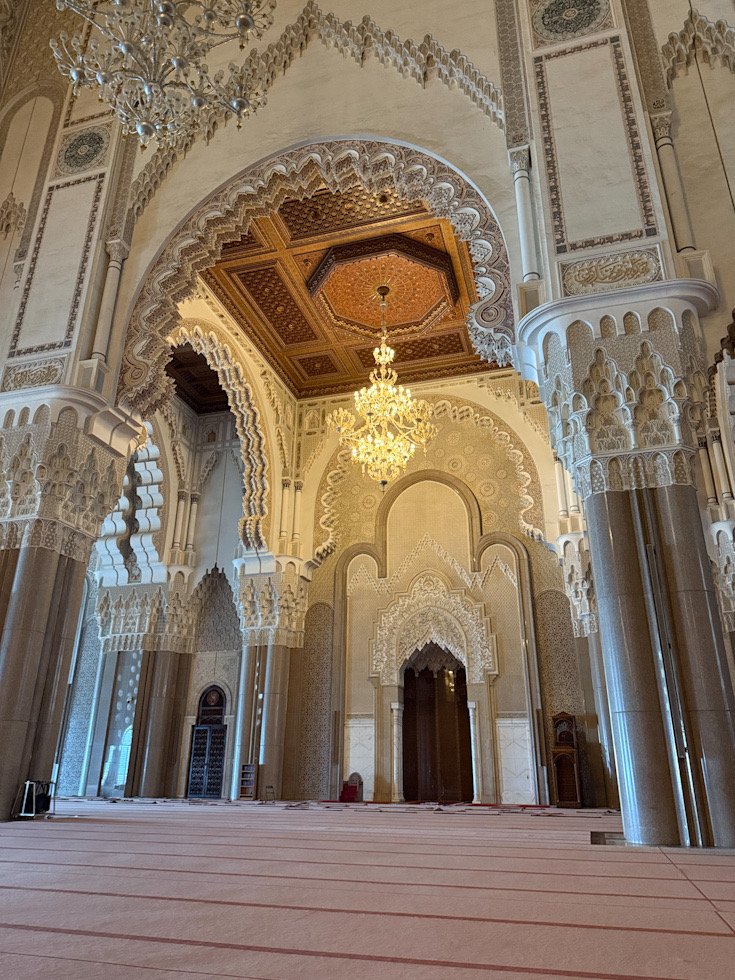
The next stop is the minaret hall. This section provides additional insight into the architecture and engineering of the mosque, including the impressive structure of the minaret.
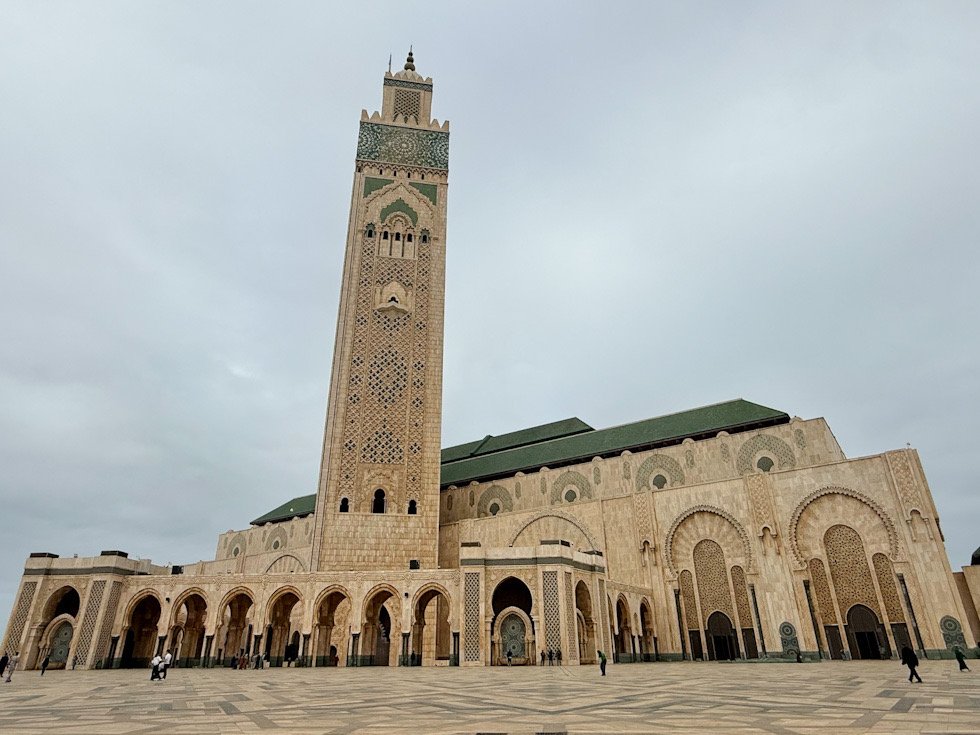
The minaret itself is one of the defining features of the building as it rises approximately 200 meters above the city, making it one of the tallest minarets in the world. You can see it from various parts of Casablanca
At the top is a decorative structure incorporating a laser beam directed toward Mecca, with a reported range of approximately 30 kilometers.
It’s an impressive combination of traditional religious architecture and modern technology.
The Ablution Hall
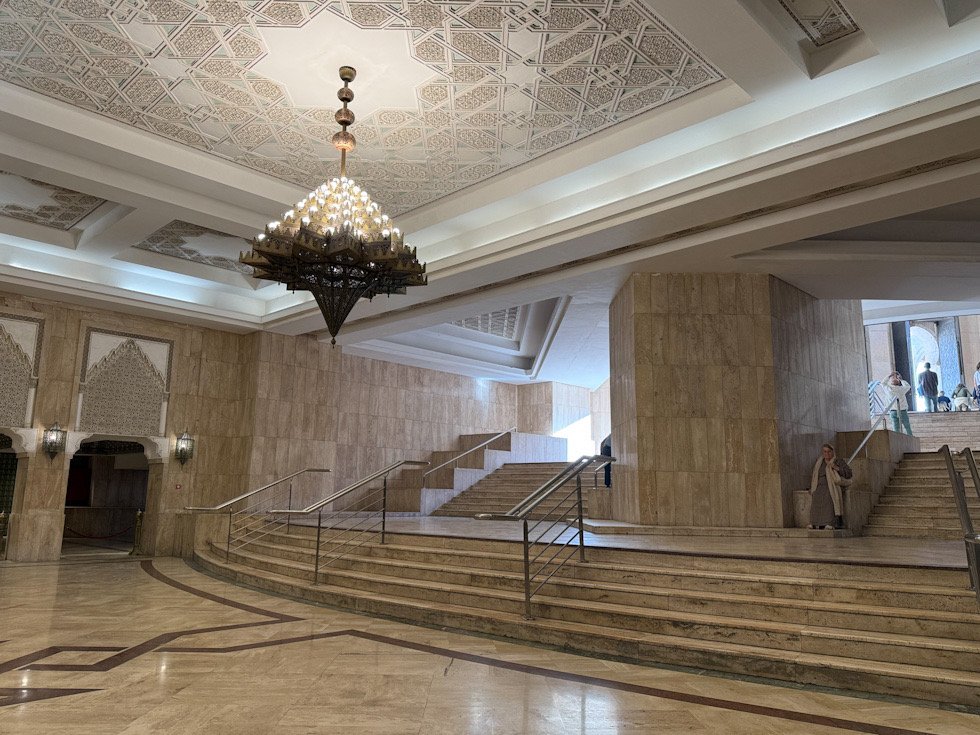
The final part of the guided visit is the ablution hall.
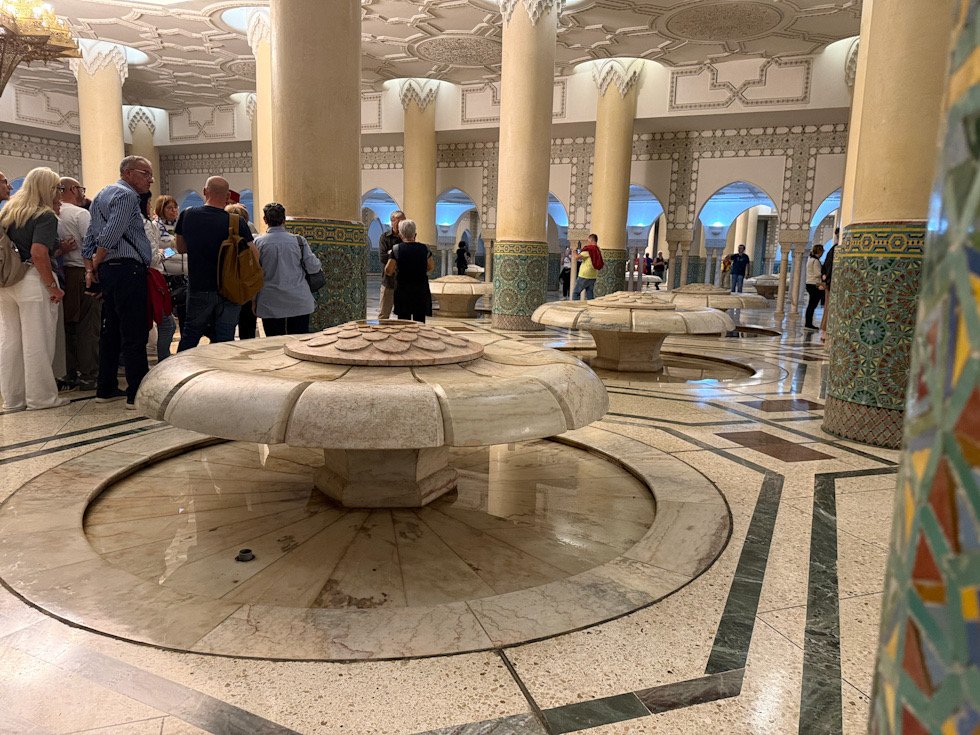
Before Muslims perform prayers, ritual washing (wudu) takes place. This area is specifically designed for that purpose and the guide talks about how the wudu is done ~ in what order the washing it done and what happens if people are unable to perform the full ritual either due to handicap/injury or lack of accessible water
The space is particularly interesting from an architectural perspective, with beautiful marble and traditional decorative details. You’ll see fountains and facilities designed for the ritual washing process, providing a better understanding of how the mosque functions as a place of worship.
Best Time to Visit Hassan II Mosque
There are two things to consider when deciding when to visit: the guided tour schedule and the weather.
Best Time of Day
- I’d generally recommend a morning tour if the schedule works with your itinerary.
- Morning visits can be more comfortable, particularly during the warmer months, and leave you with the rest of the day to explore Casablanca.
- However, the exterior is beautiful throughout the day, and late afternoon can provide lovely lighting for photographs.
- If you’re particularly interested in photographing the mosque from the outside, consider returning around sunset if you have the time.
Best Time of Year
Casablanca has a mild Atlantic coastal climate, so there’s no particularly bad season for visiting. Spring and fall tend to offer the most comfortable sightseeing conditions.
| Season | Average Daytime High | Average Nighttime Low |
| Spring (March–May) | 19–22°C (66–72°F) | 11–16°C (52–61°F) |
| Summer (June–August) | 24–26°C (75–79°F) | 18–21°C (64–70°F) |
| Fall (September–November) | 21–26°C (70–79°F) | 12–19°C (54–66°F) |
| Winter (December–February) | 17–19°C (63–66°F) | 9–10°C (48–50°F) |
One thing to remember is that the mosque is right on the Atlantic, so it can be breezy even when the rest of the city feels warm.
Hassan II Mosque – Worth It Even If You are Only Able To Admire The Exterior
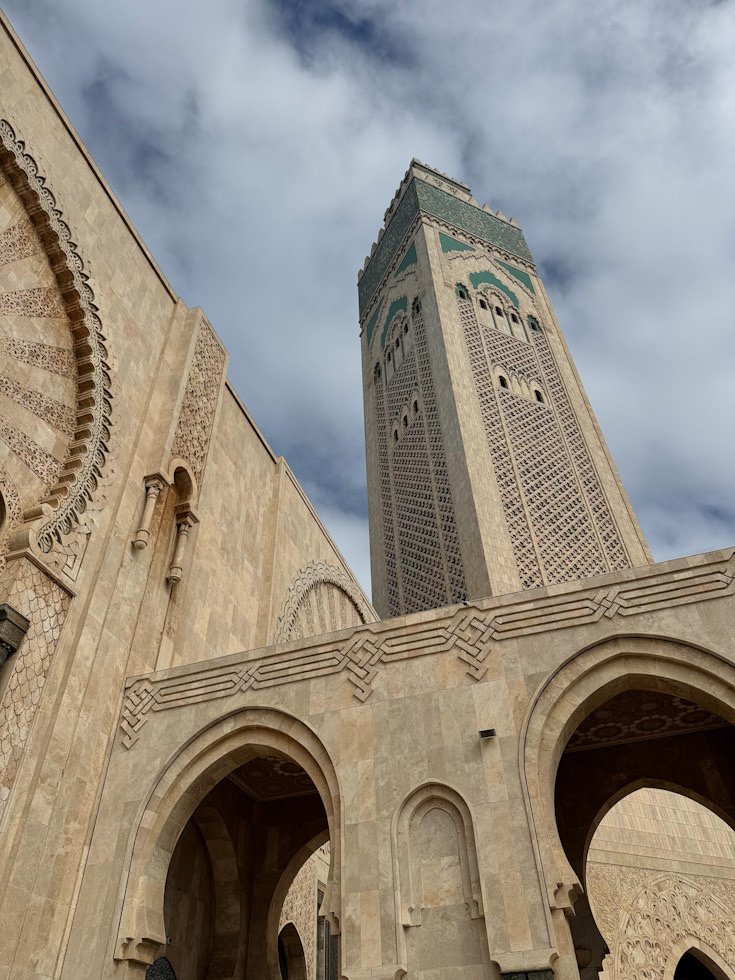
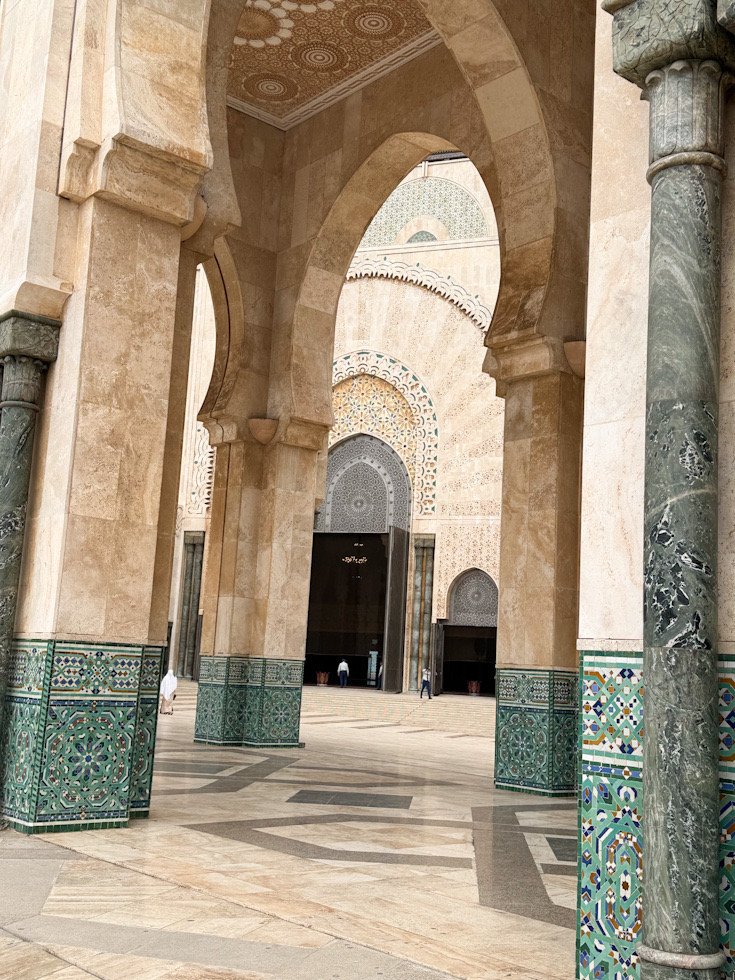
The mosque’s location is a huge part of what makes it so memorable. Rather than being tucked away among city streets, it sits directly beside the Atlantic Ocean.
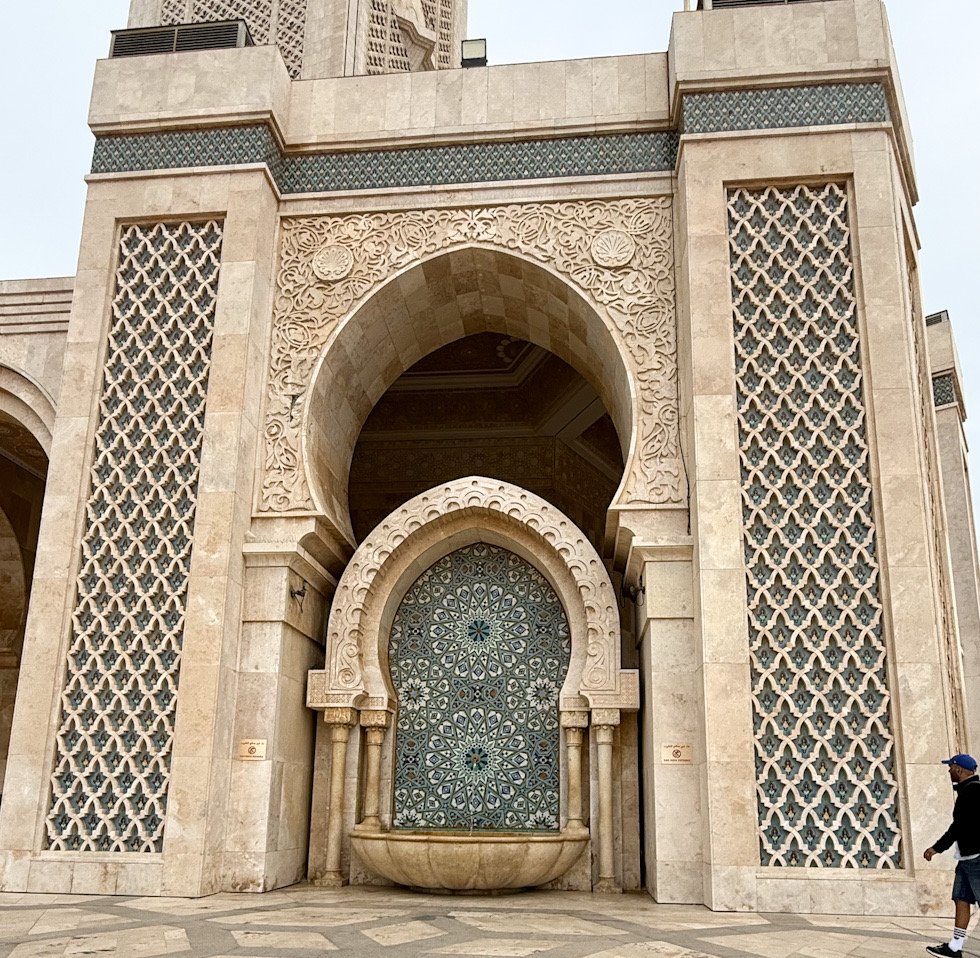
The expansive esplanade provides plenty of space to admire the building from the outside, and the contrast between the white stone, intricate architecture, blue sky, and ocean is beautiful.
Even if you don’t have time for the interior guided tour, I’d still recommend visiting the exterior.
How Long Do You Need to Visit Hassan II Mosque?
- I’d recommend allowing approximately 1.5 – 2 hours for the overall experience.
- Arriving, ticketing and getting organized (15 – 20 minutes)
- Official guided mosque tour (45 – 60 minutes)
- Exploring the exterior esplanade and taking photos (20 – 30 minutes)
Practical Visitor Tips
- Because Hassan II Mosque is an active place of worship, there are specific dress and behavior requirements.
- Both men and women are required to wear clothes that cover the shoulders, torso and come below the knees. Shorts and sleeveless clothes are absolutely forbidden.
- For women, headscarves are optional.
- You will need to remove your shoes at the start of the tour – so definitely should wear or bring socks
- The mosque provides bags so you can carry your shoes with you during the visit.
- Still photography is generally permitted during the guided visit, but always follow your guide’s instructions and stay with your group.
- Video cameras and audio-recording devices are prohibited inside the mosque.
- Be respectful of worshippers and avoid photographing people without their permission.
FAQs: Hassan II Mosque
- Can tourists visit Hassan II Mosque? Yes! Hassan II Mosque is one of the few major mosques in Morocco that welcomes non-Muslim visitors. However, non-Muslims must join an official guided tour to enter the interior.
- How much does it cost to visit Hassan II Mosque? The published admission price for foreign adults is 140 Moroccan dirhams (MAD). Reduced rates are available for children, students, and residents. Check the official foundation website for current prices.
- Do you need a ticket to enter Hassan II Mosque? Yes, if you want to visit the interior. Non-Muslim visitors must purchase a ticket for an official guided tour. The exterior esplanade can be visited without purchasing an interior tour ticket.
- Can you visit Hassan II Mosque without a guide? No, non-Muslim visitors cannot independently explore the interior. You must join an official guided tour at a scheduled time.
- How long does the Hassan II Mosque tour take? The guided visit generally takes approximately 45–60 minutes. I’d allow another 30–45 minutes for arriving, organizing your visit, and exploring the exterior.
- Is Hassan II Mosque open on Fridays? Guided visits are available on Fridays, but the schedule is more limited because of Friday prayers. Check the official schedule before planning your visit.
- Is Hassan II Mosque open during Ramadan? Yes, but visiting times change during Ramadan. Some standard tour departures may not operate, so check the foundation’s Ramadan schedule before visiting.
- What is the dress code for Hassan II Mosque? Visitors must wear clothing that covers their shoulders, torso, and legs below the knees. Shorts and sleeveless tops are prohibited. You’ll also need to remove your shoes before entering the prayer hall.
- Do women need to wear a headscarf at Hassan II Mosque? No – the official visitor rules specify coverage of the shoulders, torso, and legs below the knees. I, along with most women, on the tours did not cover our hair.
- Can you take pictures inside Hassan II Mosque? Still photography is generally permitted during guided visits, subject to your guide’s instructions. Video cameras and audio-recording devices are prohibited inside.
- Is Hassan II Mosque wheelchair accessible? The complex has visitor facilities, but accessibility can depend on the specific areas and route. Contact the mosque foundation before visiting if you need step-free access or other accommodations.
- How far is Hassan II Mosque from Casablanca Cruise Port? The mosque is approximately 3 kilometers from the cruise port. A taxi or organized transfer is generally the most convenient way to reach it. Allow additional time for traffic.
- Is Hassan II Mosque worth visiting? Absolutely! It’s one of the most impressive attractions in Casablanca and offers a rare opportunity for non-Muslim visitors to explore the interior of a major Moroccan mosque. The architecture, craftsmanship, and oceanfront setting make it a worthwhile stop.
Is Hassan II Mosque Worth Visiting?
Short answer: Absolutely. Even if you aren’t particularly interested in religious buildings, Hassan II Mosque is one of those attractions that’s impressive for reasons beyond its religious significance.
The architecture is extraordinary, the craftsmanship is beautiful, and the location beside the Atlantic Ocean makes it especially memorable. I also think the guided visit adds quite a bit to the experience. You get to see areas that you wouldn’t otherwise have access to, while learning more about the building’s history, design, and religious significance.
If you’re visiting Casablanca, I’d consider this a must-see attraction.
About Author
Rosemary is a travel hacker, points nerd, money maximizer, and female solo traveler who’s explored 70+ countries without a trust fund, sugar daddy, or sponsored content. Every mile, upgrade, and trip is completely self-funded using a mix of points, miles, and cash or earned with elite status.Through firsthand experience and plenty of trial and error, she teaches everyday travelers the art of travel hacking ie how they too can travel for cheaper, better, and more often (and she provides receipts along with a mildly concerning amount of spreadsheets)
While Rosemary doesn’t take herself too seriously, she does take award travel, making her money work harder (and searching for the best ice cream) seriously – and shares it all here because she believes that seeing the world or living your most beautiful life shouldn’t be reserved for the rich, the retired, or content creators with brand deals.
When not traveling, she is based in Denver, Colorado and loves to share the amazing things you can do, see, and experience (many of which are free!) in the Centennial state (which she feels absolutely blessed to be able to call home)