7 Day Kilimanjaro Machame Route Hike: Complete Guide to Tanzania’s Ultimate Trek
Updated January 3, 2026
Originally Published January 2, 2026
Learn everything you need to know about climbing Mount Kilimanjaro on the 7-day Machame Route. Detailed day-by-day itinerary, altitude tips, best seasons, FAQs, and planning advice for Tanzania’s most iconic hike.
I can vividly recall watching an IMAX film about the snows of Kilimanjaro as a child – it was one of those memories that just sticks with you. Something that seemed so magical – that you could see African animals wit
After seeing the IMAX movie so long ago, Kili had haunted my dreams. I am so grateful that I was lucky enough to have been able to see the snows of Kilimanjaro before they disappear forever and completed the journey. I hope that you are also able to experience this truly awe inspiring trek!
Please note: this post contains affiliate links which means if you buy something following a link on this page, I may get a small commission. As an Amazon Associate, I earn from qualifying purchases. This is absolutely free for you/does not cost you anything extra! There’s no sponsored content nor do I run ads here so this helps so much in reducing the ever-increasing costs of keeping this site active.Thanks! Rosemary
Mount Kilimanjaro
Also known as the Roof of Africa, Mount Kilimanjaro is the highest mountain on the continent. Rising 5,895 meters (19,341 feet) above sea level, it is the world’s tallest free-standing mountain. Located in northeastern Tanzania near the Kenyan border, Kilimanjaro (also referred to as Kili) is a UNESCO World Heritage Site and an iconic natural landmark.
Mount Kilimanjaro is also famous for being one of the “7 Summits” or the highest mountains on each of the seven continents. What makes Kilimanjaro truly unique is that it can be climbed without technical mountaineering skills. You ascend through five distinct ecological zones (cultivation, rainforest, heather-moorland, alpine desert, and arctic summit) experiencing dramatic changes in climate and scenery over just a few days.
Seasonal Guide For Kilimanjaro Machame Route Hikes
Mount Kilimanjaro can be climbed year-round, but weather conditions vary significantly by season. Choosing the right time for your Machame Route trek can greatly impact visibility, trail conditions, and overall summit success.
- January to March: Clear Skies & Fewer Crowds
- Best for: First-time climbers, photographers, and hikers seeking quieter trail
- Weather: Mostly dry with occasional short showers
- Daytime Temperatures: Lower slopes: 18 – 25°C (65 – 77°F) / Summit night: -10°C to -15°C (14 – 5°F)
- Trail Conditions: Generally dry with some snow possible near the summit
- Crowds: Moderate to low
- This period offers some of the best visibility on Kilimanjaro, with clear summit views and fewer climbers than peak season. January is typically drier, while February and March may bring brief afternoon showers. Snow near the summit adds dramatic scenery without major difficulty.
- April to May: Long Rainy Season:
- Best for: Experienced hikers, photographers seeking dramatic landscapes, and budget travelers
- Weather: Heavy rainfall, especially in April
- Daytime Temperatures: Lower slopes: 16 – 22°C (60 – 72°F) / Summit night: -8°C to -12°C (18 – 10°F)
- Trail Conditions: Muddy, slippery, reduced visibility
- Crowds: Very low
- The long rainy season brings lush green landscapes and quiet trails, but also challenging footing and cloud cover. While the Machame Route remains open, conditions are tougher, and summit success rates are slightly lower due to weather rather than altitude.
- June to September: Peak Season & Most Stable Weather
- Best for: First-time climbers, guided groups, and those prioritizing summit success.
- Weather: Dry, cool, and stable
- Daytime Temperatures: Lower slopes: 15 – 20°C (59 – 68°F) / Summit night: -15°C to -20°C (5 to -4°F)
- Trail Conditions: Dry, dusty, and well-defined
- Crowds: High especially July – August
- This is the most popular time to climb Kilimanjaro. Weather is reliable but temperatures are colder, particularly on summit night. Advance bookings are essential due to high demand.
- October: Transitional Shoulder Season
- Best for: Climbers seeking balance between good weather and fewer crowds
- Weather: Mostly dry with increasing cloud cover late in the month
- Daytime Temperatures: Lower slopes: 18 – 23°C (65 – 73°F) / Summit night: -10°C to -15°C (14 – 5°F)
- Trail Conditions: Good overall
- Crowds: Moderate
- October is an excellent shoulder month, combining manageable crowds with favorable hiking conditions. It’s often overlooked but offers strong summit success rates.
- November to Early December: Short Rainy Season
- Best for: Flexible travelers and experienced hikers who are not put off by wet conditions
- Weather: Intermittent rain, usually in the afternoons
- Daytime Temperatures: Lower slopes: 17 – 24°C (63 – 75°F) / Summit night: -8°C to -12°C (18 – 10°F)
- Trail Conditions: Variable; muddy in forest zone
- Crowds: Low to moderate
- The short rains are less intense than April–May, and many climbers still summit successfully. Clear mornings are common with clouds rolling in later in the day.
No matter the season, the 7-day Machame Route provides excellent acclimatization, making it one of the safest and most successful ways to reach Uhuru Peak year-round.
FAQs for 7 Day Kilimanjaro Machame Route Hike
- How difficult is the Machame Route? Moderate to challenging due to altitude and long summit day but suitable for fit beginners.
- What is the success rate for the 7 day Machame Route? I have seen wildly different numbers from operators but it is probably somewhere between 65 – 75%* (I think that there is some padding of the numbers to make it more likely for people to book)
- Is Machame better than Marangu? Machame offers better scenery and acclimatization, while Marangu has hut accommodations. The success rate is significantly higher for Machame over the Marangu with it again varying figures from 50 – 66%*
- How cold does it get? Summit night temperatures can drop to -10°C to -15°C (14°F to 5°F).
- Do I need prior hiking experience? There are many that say that isn’t required and endurance training is enough but I strongly disagree. A good tour operator will tell you that this route is best suited for those with some hiking or backpacking experience.
Check out my Eight Things You Should Know Before Climbing Mount Kilimanjaro post that dives more into what preparations we did and what I would have done differently on this hike.
What To Consider When Booking 7 Day Kilimanjaro Machame Route Hike
*Why This Isn’t A Review Post
Unfortunately the company that we booked our Kilimanjaro trek is no longer in business so it didn’t make sense to write a review. We went with that company mainly on a recommendation from my sister’s friend but I will go through the criteria that we would have used to make our decision.
Which Way Up? Kilimanjaro Routes Overview
Mount Kilimanjaro has seven established trekking routes, each offering a different balance of scenery, difficulty, acclimatization, length, comfort and price. Finding the right route that works best for you is taking all of those factors into account.
The Different Routes With Some Pros and Cons
- Marangu Route: This is the original Kilimanjaro route and is known as the “Coca-Cola Route” as there are some spots where you can buy a cool drink. This is the only route that is a back up and back (you come down where you can up) but has poorer acclimatization and lower success rates. Often chosen because there are huts along the way (vs the six other routes where you will sleep in tents) and appeals to those on a tight budget. Historically has been the busiest route.
- Lemosho Route: Longer and quieter than Machame, with outstanding scenery and excellent acclimatization since it’s typically done in 7 days but can be extended to 8. Is quickly becoming a very popular route and is also pricier.
- Rongai Route: It is the only route that starts up the north side of the mountain. It is less crowded and tends to be drier (which can be a plus if you are needing to trek Kili during the rainy season). This route is considered less scenic overall and has lower success rates.
- Shira Route: Similar to the Lemosho route but begins much higher. To reach the starting point, you have a lengthy and bumpy half-day drive, leaving you to sleep at 3,500 meters on your first night. This can be dangerous if you hadn’t acclimatized before and solitude.
- Northern Circuit: The newest and the longest route with the highest success rate, ideal for slow acclimatization and relative solitude.
- Umbwe Route: This is the shortest route and is very steep and challenging, recommended only for experienced trekkers.
Why Choose Machame? And Specifically Why Did We Choose the 7 Day Machame Route?
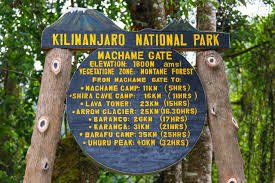
The Machame Route, often called the “Whiskey Route,” is one of the most scenic and popular ways to climb Mount Kilimanjaro. Known for its dramatic landscapes and strong acclimatization profile, the 7 day Machame itinerary balances challenge and success rate and makes it a top choice for adventurous hikers. Basically this sums up why we chose this route in addition to the price point as we did a private climb (only our group)
With its “climb high, sleep low” design, it offers one of the highest success rates for trekkers who choose the 7-day itinerary and has accordingly become one of, if not, the most popular route now (which wasn’t the case when we climbed – it was markedly less popular than the Marangu route.)
As Always The (Tour) Details Matter
For the tour, you need to decide on which one and much of that is how to choose a tour operator. I opt for one that is highly rated with lots of reviews. And I look at reviews: what are the positive ones praising and are those points important to you? And as importantly, the negative ones: sometimes you can see that it isn’t the operator’s fault with people not reading descriptions or things that are out of their control. And how they responded to the criticism if it is warranted is also very telling.
And look at the tour description. In the FAQ section, I mentioned that I dislike when people say that altitude is more important than fitness for Kilimanjaro. I know of a handful of people that did not summit because they were told by their tour operator that some walking would be sufficient preparation!
- Some questions to help you decide/distinguish between operators:
- How does the tour operator describe the route and as importantly what are they recommending for preparation/what fitness level do they perceive this hike to be?
- How long has the company been in business and what is the success rate for their hikes – can they explain why it’s so high matters more than the %
- What measures do they have in place for a medical emergency in general but specifically for altitude sickness?
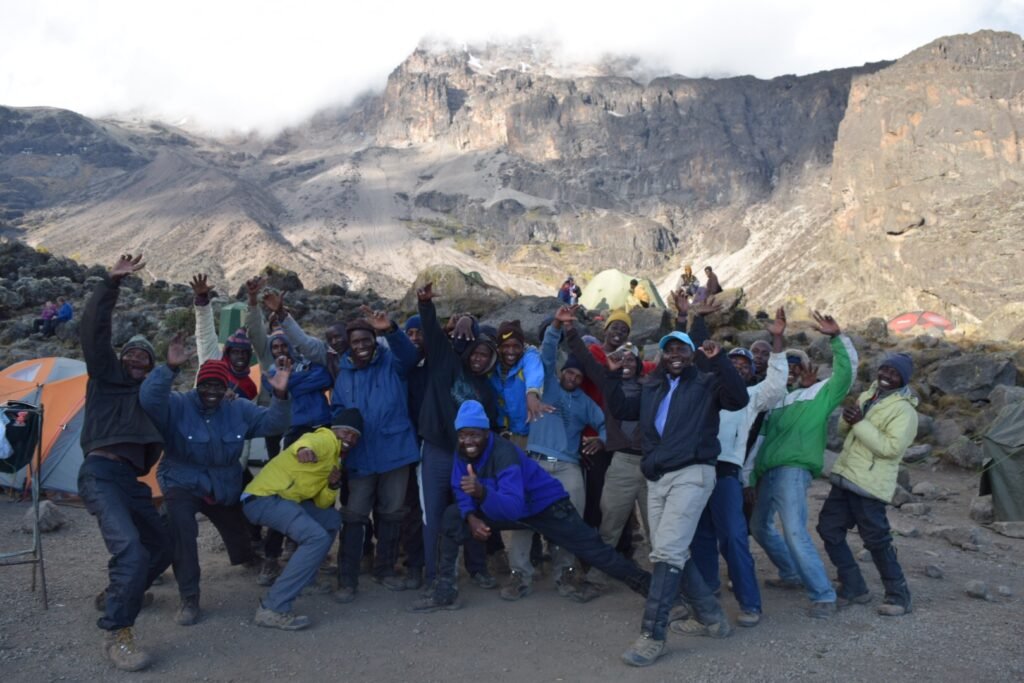
- Personally for me, how they treat their team matters.
- Here are some questions to help you decide between tours – why there’s a dramatic price between tours (and companies)
- Do you want a private tour for just your group – which will be more expensive of course but for many, worth the price.
- If you opt to join a group, what is the max and average size of the group.
- What type of meals will be served on the trek? Food is very important to me (and the others I hiked with) so we went with a company that had hot meals vs bagged lunches
- Accommodations (type of tent/padding/meal tents) will vary and also does your tour include a night at a hotel prior to the trek?
- Are there optional add-ons? ie We added-on a potty tent which was worth every penny
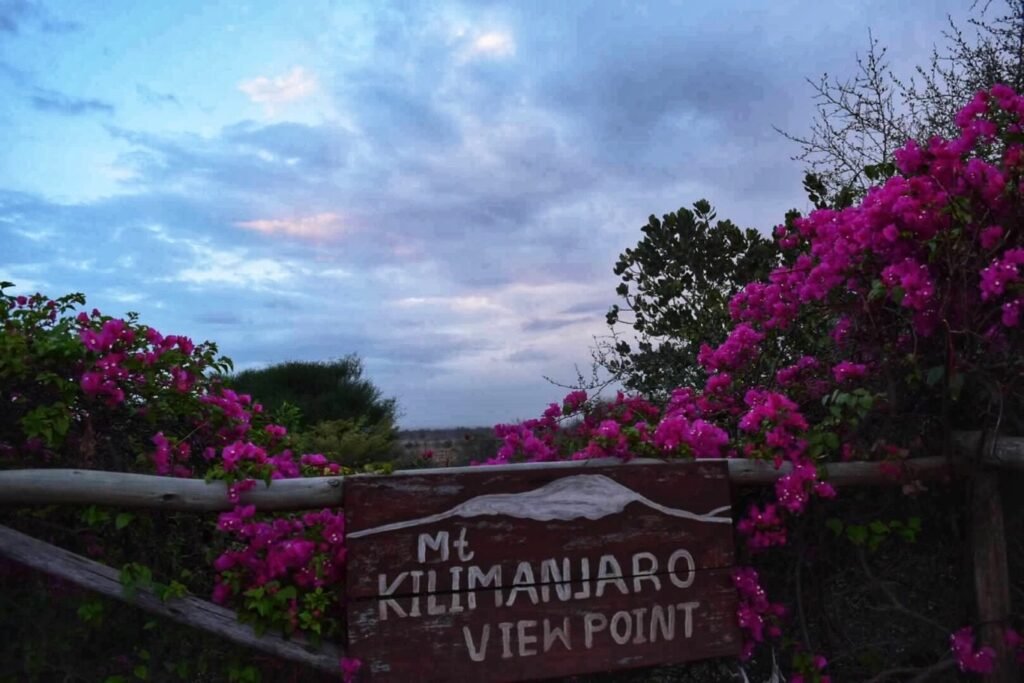
7 Day Kilimanjaro Machame Route Hike Itinerary (Day-by-Day)

Day 1: Machame Gate → Machame Camp
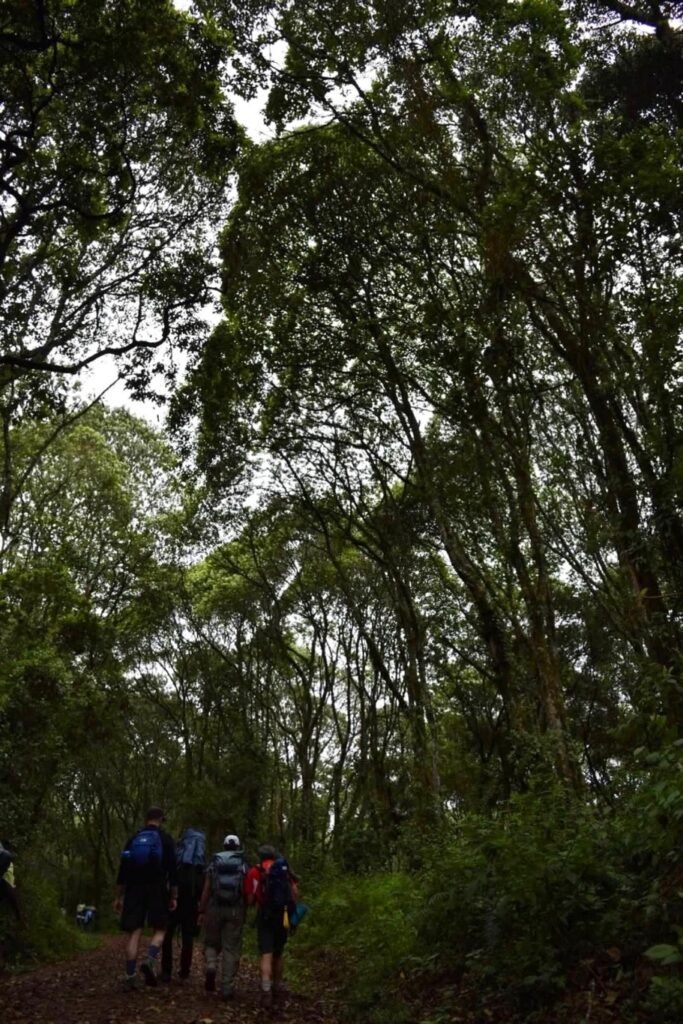
- Elevation: 1,800 m → 3,000 m
- Hiking Time: 5 – 7 hours
- Terrain: Rainforest zone with muddy trails, roots and stones
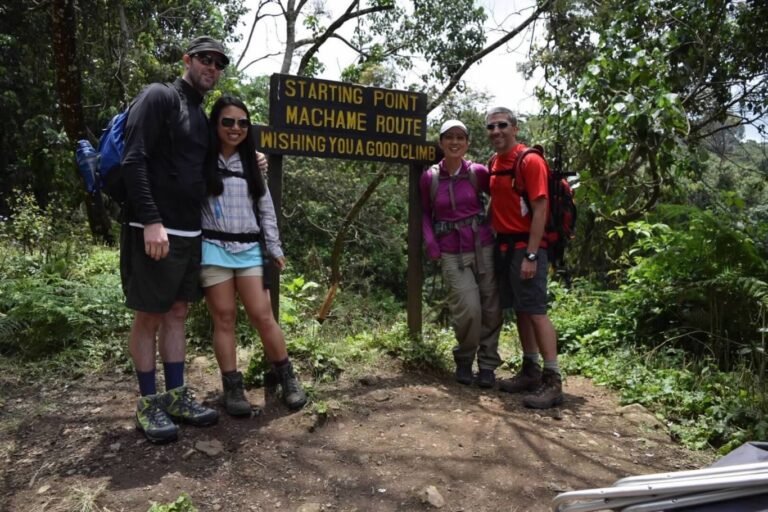
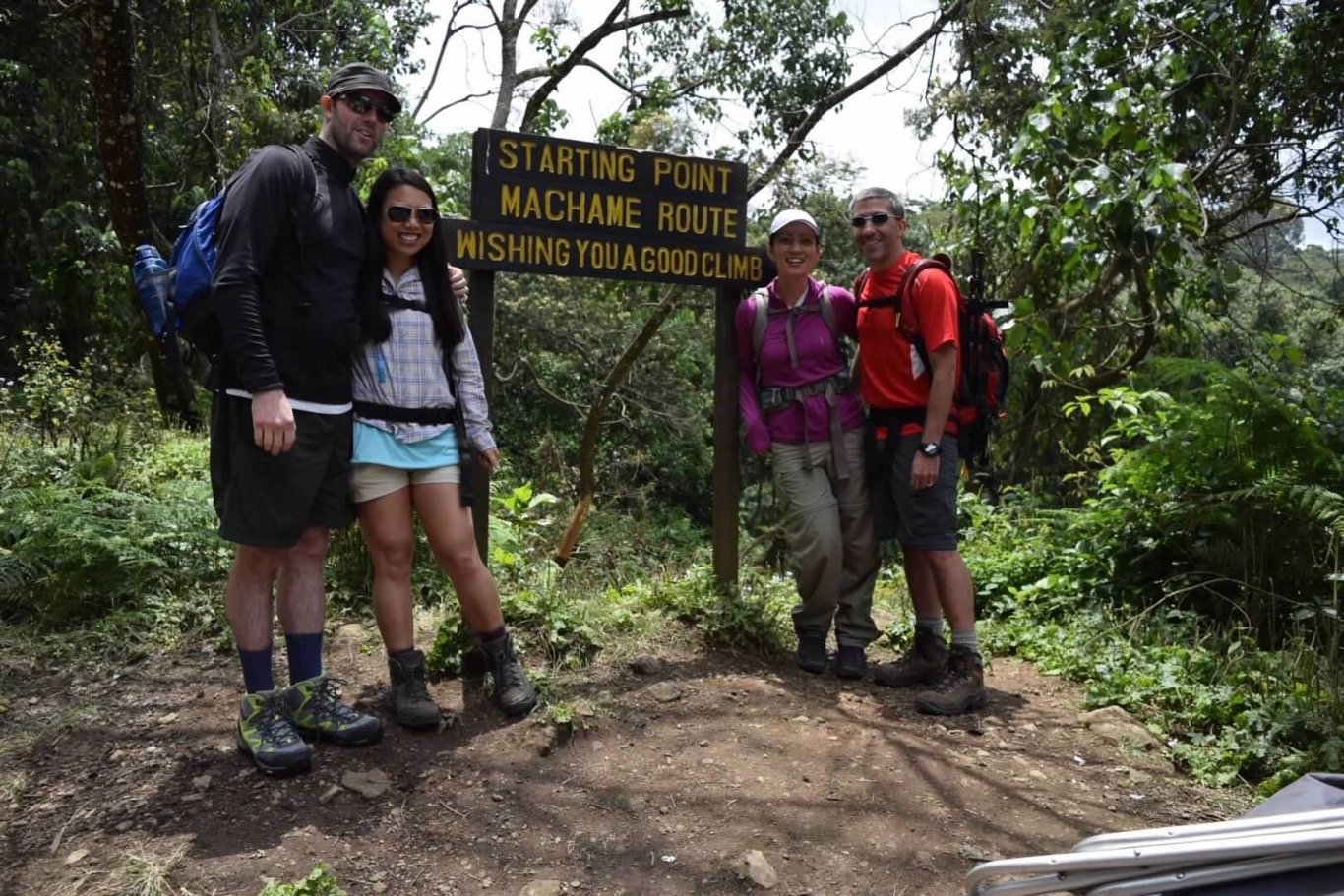
The Kilimanjaro trek begins at Machame Gate, where permits are processed before entering the lush rainforest.
This zone is humid and alive with towering fig trees, mosses, and dense undergrowth. Expect muddy paths, especially after rain.
This day is less about altitude and more about settling into your trekking rhythm. Porters move efficiently while guides set a steady, manageable pace.
Acclimatization notes: Altitude effects are minimal but hydration is key.
Highlights: Dense rainforest, first Kilimanjaro views
Overnight: Machame Camp (tents)
For a more detailed look into what Day 1 was like on my 7 Day Kilimanjaro Machame Route Hike, read this post
The stats for my Day 1: Hike 5.12 miles (8.2 km) Elevation Gain approx. 3,930 ft (1,200 m) Time: 5.5 hours
Day 2: Machame Camp → Shira Camp
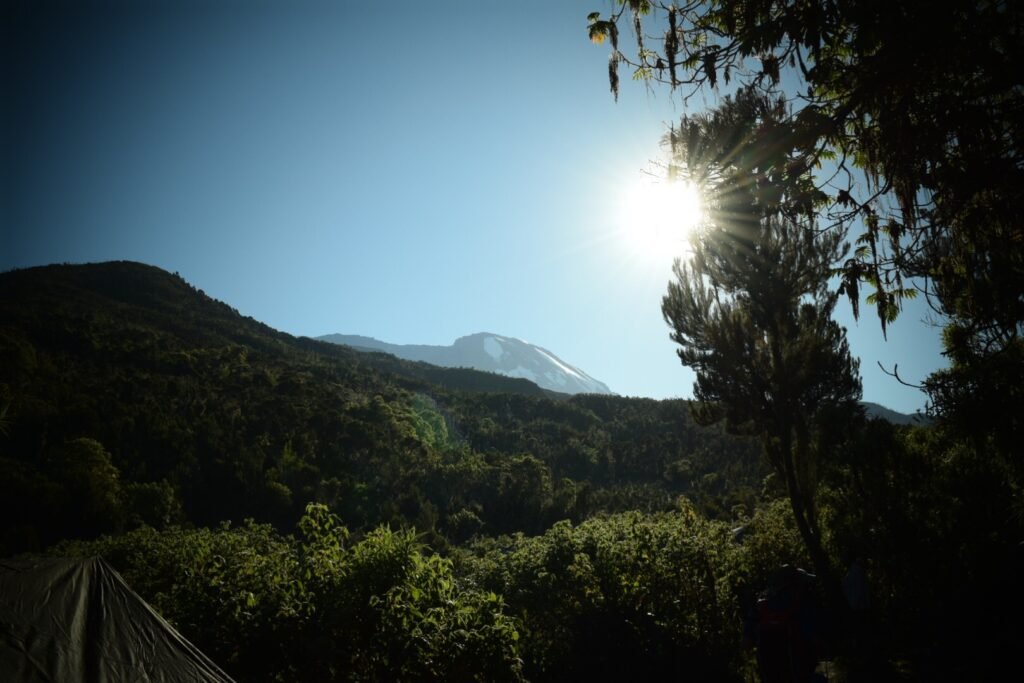
- Elevation: 3,000 m → 3,840 m
- Hiking Time: 4 – 6 hours
- Terrain: Heather-Moorland zone with rocky ridges, open views
The rainforest gradually gives way to heath and moorland. The vegetation thins as you climb onto the Shira Plateau and panoramic views of Mount Meru and Kibo Peak emerge. The trail climbs steadily along rocky ridges and across open valleys.
Temperatures drop noticeably in the evening and this is often the first night where hikers begin to feel mild altitude symptoms.
Acclimatization notes: Walk slowly and eat well even if appetite decreases. Note that this is why having tasty, warm food can be very important for your summit success
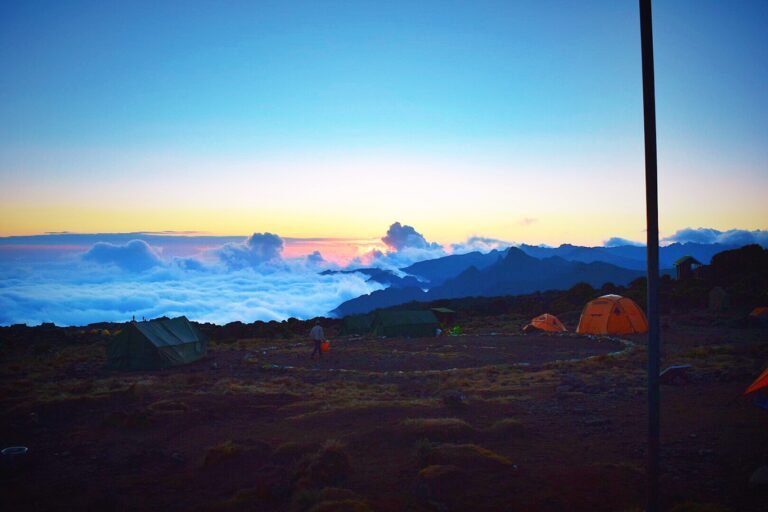
{If you look in the middle of this picture, you can make out the outline of a circle – any idea what it is?
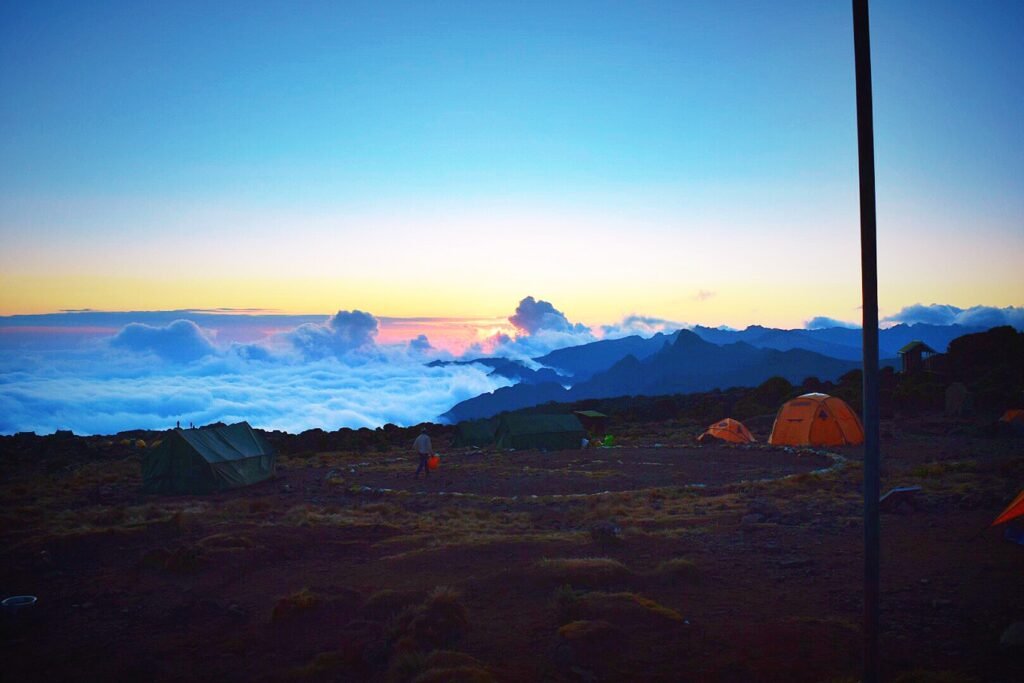
It’s helicopter landing pad that can be used to quickly evacuate someone from the mountain…while this is a fairly easy hike – it is multi-day at altitudes that can stress the body. Why it is so important to respect the mountain
Highlights: Shira Plateau, sweeping mountain vistas
Overnight: Shira Camp
For a more detailed look into what Day 2 was like on my 7 Day Kilimanjaro Machame Route Hike, read this post
Stats for Day 2: Hike 3.15 miles (5 km) Elevation Gain approx. 2,650 ft (808 m) Time: 4.5 hours
Day 3: Shira Camp → Lava Tower → Barranco Camp
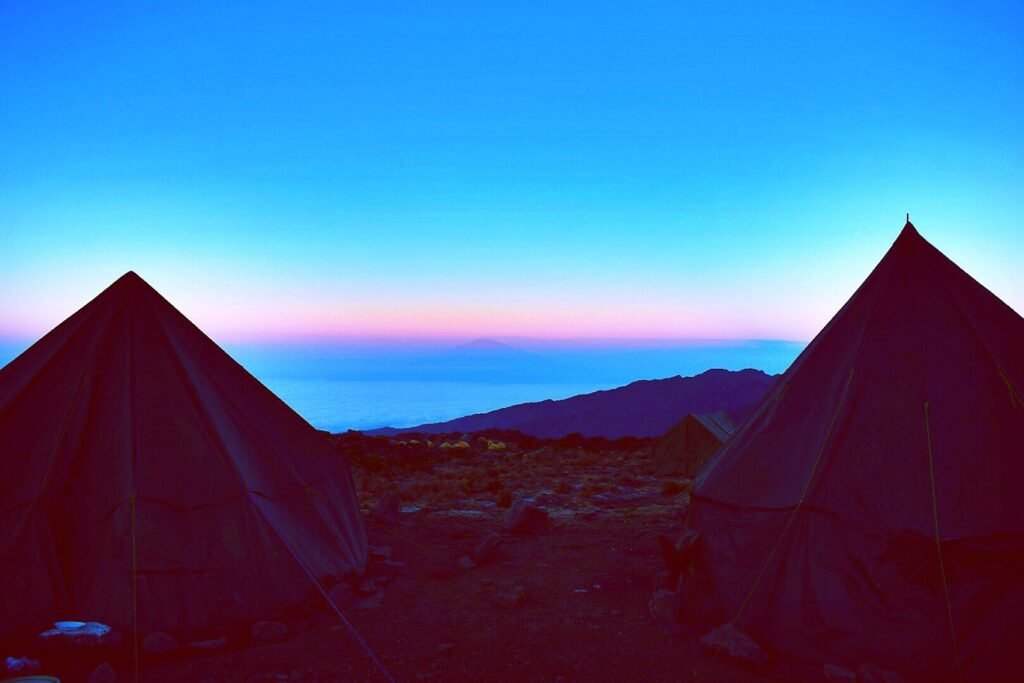
- Elevation: 3,840 m → 4,630 m → 3,960 m
- Hiking Time: 6 – 8 hours
- Terrain: Alpine Desert zone with volcanic rock
This is one of the most important days for acclimatization. The trail climbs steadily to Lava Tower, an imposing volcanic formation surrounded by barren alpine desert. Many hikers experience headaches or fatigue here due to the altitude.
After lunch at Lava Tower, the route descends sharply into the Barranco Valley, where oxygen levels improve and vegetation returns.
Acclimatization notes: “Climb high, sleep low” day—critical for summit success.
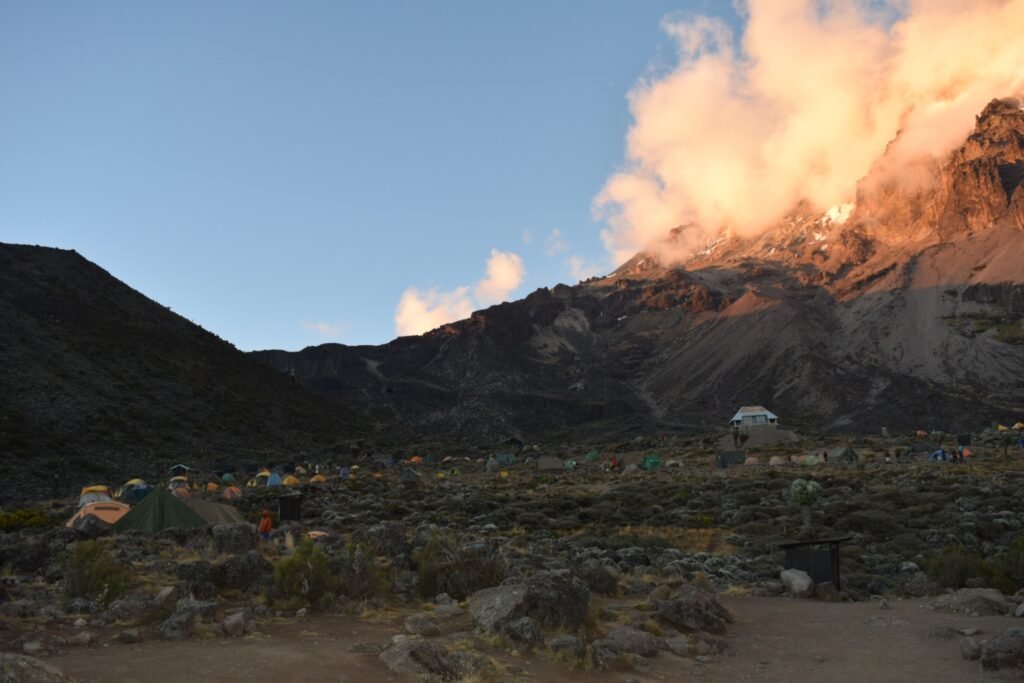
Highlights: Lava Tower, dramatic altitude shift
Overnight: Barranco Camp
For a more detailed look into what Day 3 was like on my 7 Day Kilimanjaro Machame Route Hike, read this post
Stats for Day 3: Hike 6.5 miles (10.5 km) Elevation Gain approx. 2,820 ft (860m) Time: 7.5 hours
Day 4: Barranco Camp → Karanga Camp
- Elevation: 3,960 m → 4,035 m
- Hiking Time: 4 – 5 hours
- Terrain: Alpine Desert zone with scrambling, ridges, valleys
The day begins with the famous Barranco Wall, a steep but non-technical scramble that requires using hands for balance. Though it looks intimidating, most hikers find it enjoyable and rewarding.
Beyond the wall, the trail winds across alpine ridges with dramatic views of glaciers and deep valleys before reaching Karanga Camp.
Acclimatization notes: Short hiking day helps recovery.
Highlights: Barranco Wall, views of Heim Glacier
Overnight: Karanga Camp
For a more detailed look into what Day 4 was like on my 7 Day Kilimanjaro Machame Route Hike, read this post
Stats for Day 4: Hike 3.15 mile (5 km) Time: 4 hours
Day 5: Karanga Camp → Barafu Camp
- Elevation: 4,035 m → 4,640 m
- Hiking Time: 3 – 4 hours
- Terrain: Rocky, dry, exposed
This shorter day is all about preparation. The landscape becomes stark and barren as you approach Barafu Camp, the base for the summit attempt. After an early dinner, guides brief the group on summit night strategy.
Rest, hydrate, and mentally prepare for the longest day ahead.
Acclimatization notes: Avoid overexertion; conserve energy.
Highlights: Preparation for summit push
Overnight: Barafu Camp
Day 6: Barafu Camp → Uhuru Peak → Mweka Camp
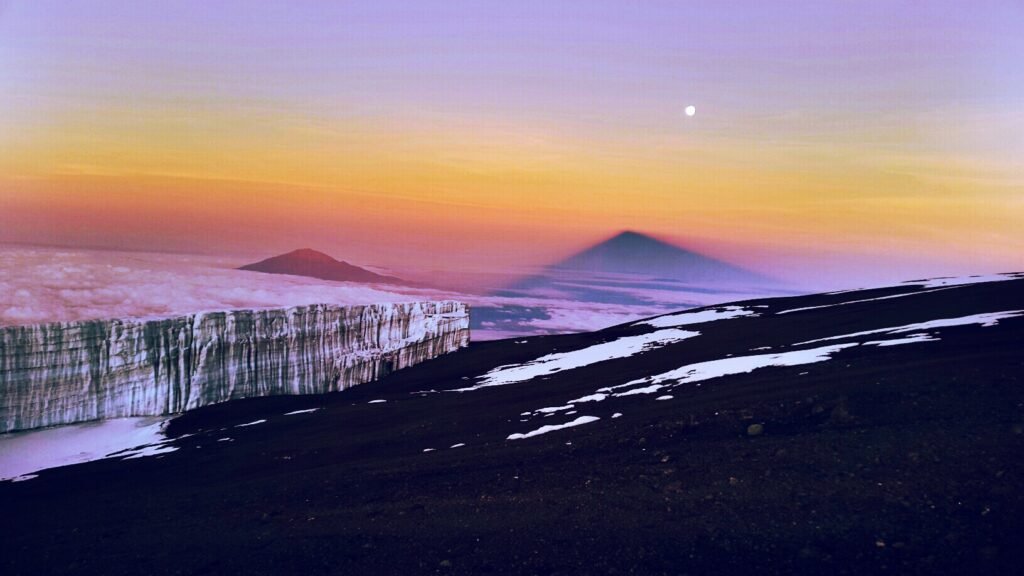
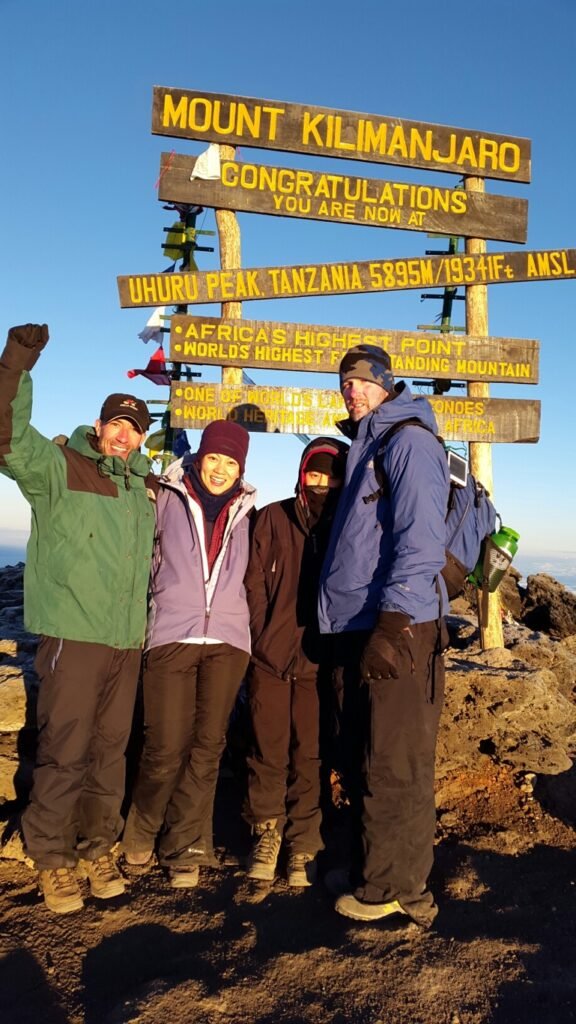
- Elevation: 4,640 m → 5,895 m → 3,100 m
- Hiking Time: 10 – 14 hours
- Terrain: Scree, ice, high alpine
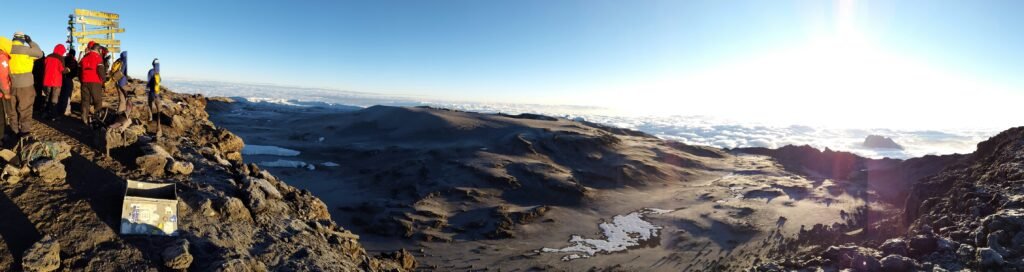
Summit day begins around midnight. The ascent is slow and steady over loose volcanic scree to Stella Point (5,756 m). From there, a gradual ridge leads to Uhuru Peak, the highest point in Africa.
After celebrating and taking photos at sunrise, the long descent continues past Barafu Camp and down to Mweka Camp.
Acclimatization notes: Expect extreme fatigue and cold temperatures.
Highlights: Uhuru Peak, sunrise over Africa
Overnight: Mweka Camp
For a more detailed look into what the push to the summit (Days 5 + 6) was like on my 7 Day Kilimanjaro Machame Route Hike, read this post
Stats for the summit part of the trek: 2.15 miles (3.5 km) and gain 1,950 ft (595 m) in altitude and reach the Barafu camp (15,200 ft) very early in the day.
Day 7: Mweka Camp → Mweka Gate
- Elevation: 3,100 m → 1,640 m
- Hiking Time: 3 – 4 hours
- Terrain: Rocky, dry, exposed
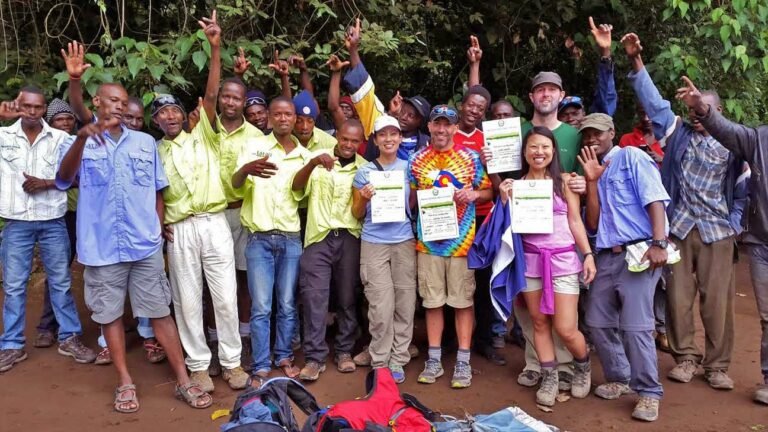
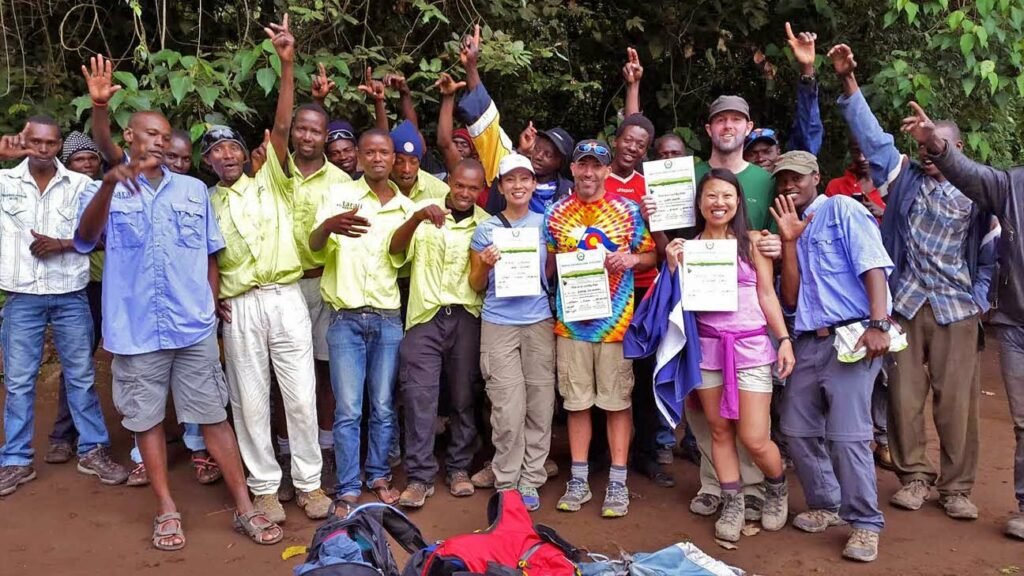
A final descent through lush rainforest brings you back to Mweka Gate, where you receive your summit certificates and say goodbye to your mountain crew.
Highlights: Celebration and certificate for completing of one of the world’s greatest treks.
For a more detailed look into what Day 7 was like on my 7 Day Kilimanjaro Machame Route Hike, read this post
Final Thoughts – Summiting Kilimanjaro Was An Ultimate Wanderlist Experience
For many travelers, hiking Kilimanjaro is an ultimate wanderlist experience and one of the most rewarding unique things to do in Tanzania, combining physical challenge, cultural encounters with local guides and porters, and the once-in-a-lifetime moment of standing atop Uhuru Peak at sunrise.
I am still humbled by the experience (both in ego but also in awe) and am so glad that I was able to see the snows on the roof of Africa before they are gone forever.
High Altitude Hiking Tips for Kilimanjaro
- Consider the trek with the most days that you can manage (money and time away) to increase your summit success odds
- Walk pole pole (slowly) to conserve energy
- Drink 3 – 4 liters of water daily
- Eat even when appetite drops
- Follow your guide’s pace and advice
- Know symptoms of altitude sickness (headache, nausea, dizziness)
Good to Know Before You Go
- There is no technical climbing required, you should be have a good fitness level
- Many say that it’s altitude that is the main challenge but many find the trek to be a mental and physical challenge.
- Set yourself up for success with your preparation before the climb
- Guides and porters are mandatory
- Tipping is customary and expected
- Travel insurance should cover high-altitude trekking
Why Chose to Book This Activity Via Viator?
Note: check prices against tour operator websites as booking directly may be significantly cheaper! I couldn’t find this combo tour/safari on the Tusker Trail website so not sure if there is a premium added to the price here
Honestly if I were to climb Kilimanjaro again, I would opt for the Lemosho Route.
Not only because I would want a different experience but I have told my friends to consider the Lemosho route due to the popularity of the Macheme Route. Why specifically this Kilimanjaro Climb & Safari – Lemosho Route tour? Besides it being this route, I would chose it based on the company. Tusker Trails has been leading climbs since 1977 with a very high summit success rate (I do think that it could be cou
You can book the Kilimanjaro Climb & Safari – Lemosho Route tour through Viator and possibly triple / quadruple stack your earning/savings potential:
- #1-getting rewards on your credit card
- #2-getting Viator rewards: You earn 5% on the booking that can be used towards a future booking – in this case, it would be $409.40
- #3-getting cashback/points or miles (using Rakuten or the AA shopping portal) – this is my ultimate reason as the points / miles quickly add up! Let’s say you book when it’s 12% cashback on Rakuten, which would be $982.56 or 98,256 Bilt or AMEX point – read this for more on the Bilt/Rakuten partnership. Or if you want valuable AA miles, if you book when it’s 8 miles/$1, you would earn 71,040AA miles.
- #4-if your credit card has any Viator offers, you can save even more!
Why Book This Tour Via GetYourGuide Instead?
Unfortunately Tusker Trails does not have this tour on GetYourGuide.
Want to save 5% on a GetYourGuide activity or excursion? Book via app with discount code: BEAUTLIFEWORLD5.
For more on the discount code specifically, read this and on GetYourGuide in general, read this
- book activities via GetYourGuide(GYG) or Viator & day/spa/pool passes with ResortPass
- combine that with using a shopping portal to earn cashback or miles
- Stay connected/informed with T-Mobile or Airalo
- Read this for info on GYG and this for why I use Viator and this for more on ResortPass
- Details on using Rakuten for cashback and here’s for AA eShopping
- Here’s why I love T-Mobile & the deets on using Airalo
Related Mount Kilimanjaro Posts
About Author
Rosemary is a travel hacker, points nerd and female solo traveler who’s explored 70+ countries without a trust fund, sugar daddy, or sponsored content. Every mile, upgrade, and trip is completely self-funded using a mix of points, miles, and cash or earned with elite status. And she shows you the receipts along with a mildly concerning amount of spreadsheets. Through firsthand experience and plenty of trial and error, she teaches everyday travelers the art of travel hacking and how they too can travel for cheaper, better, and more often. While Rosemary doesn’t take herself too seriously, she does take award travel (and searching for the best ice cream) seriously – because seeing the world shouldn’t be reserved for the rich, the retired, or content creators with brand deals.